Is Zaragoza Worth Visiting in Summer 2026? History, Hidden Curiosities and Where to Stay in the Old Town for the Solar Eclipse
From La Seo’s overlooked brilliance to exact 2026 prices, tapas in El Tubo and practical old-town stays, here’s an honest answer to the question: is Zaragoza worth visiting in summer 2026?
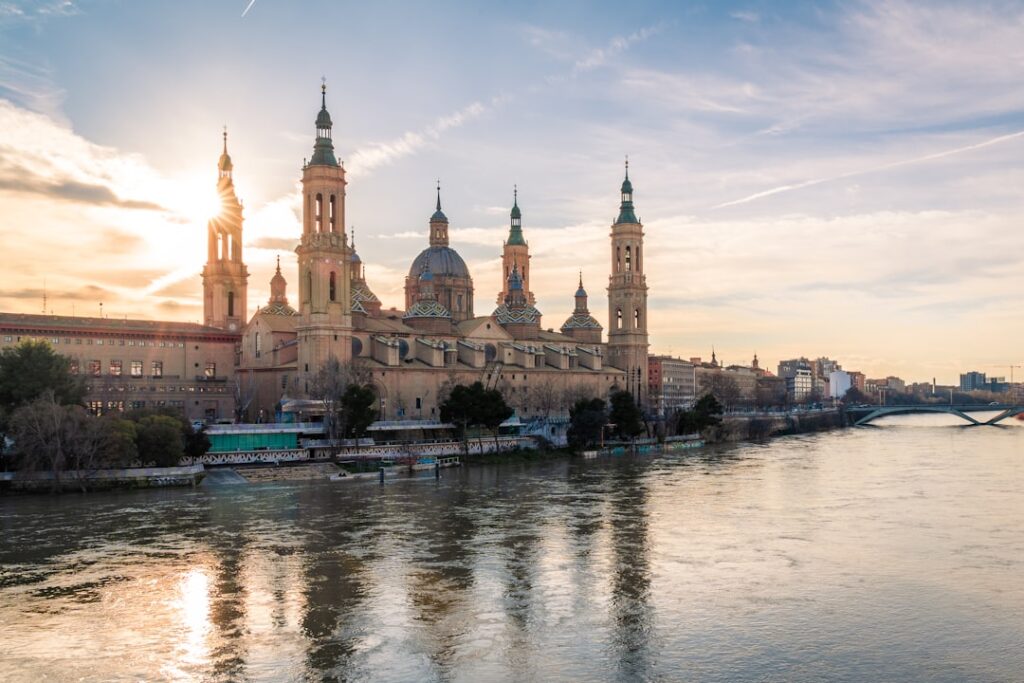
At around half past ten, when the bells around Plaza del Pilar begin to overlap and the stone is already giving back the day’s heat, Zaragoza feels different from other Spanish cities. The breeze coming off the Ebro can make the square seem almost theatrical, and if you slip a few minutes away into the darker lanes behind Calle Estébanes, you are suddenly in a world of vermouth, tiled bars and old men discussing politics over anchovies. That contrast is what visitors usually miss.
So, is Zaragoza worth visiting in summer 2026? Yes, with a few honest caveats. It is not as instantly packaged as Seville or as self-conscious as San Sebastián. You come here for layers: Roman, Islamic, Mudéjar, Baroque, modern everyday life, and some of the best big-sky urban walking in Spain. If you are planning a summer trip, or using the city as a base around the 2026 solar eclipse period, Zaragoza makes particular sense because it is compact, culturally serious and easy to navigate on foot.
Why does Zaragoza make more sense than people expect for a summer 2026 trip?
The first reason is practical: the historic centre is genuinely walkable. From the Basílica del Pilar to La Seo is only about 300 metres, roughly a four-minute stroll, which means you can move between two of the city’s great monuments almost without thinking about it. Even the Palacio de la Aljafería, which many assume needs transport, is about 1.5 kilometres from the Pilar, around 20 minutes on foot. For a city with this much history, that compactness matters.
The second reason is that Zaragoza wears its history lightly. You can spend the morning inside a fortress-palace from the 11th century, have lunch in a restaurant founded in 1825, and finish the day with a drink in El Tubo without ever feeling trapped in a museum piece. There is enough going on to fill several days, but not so much that the place becomes exhausting.
Summer, of course, has its realities. Midday heat can be fierce, and anyone promising otherwise is being silly. The trick is to do what locals do: start early, retreat for a proper lunch, slow down in the afternoon, then come out again once the streets begin to wake up. Zaragoza rewards that rhythm. Broad stone squares, riverside air and late evenings make more sense here than a rushed tick-list.
And 2026 gives the city extra energy. There are major events across the year, from Leiva on 27 June 2026 at the Estadio Modular Ibercaja Zaragoza to Aitana on 10 July 2026 at the Pabellón Príncipe Felipe. Later in the year, the Fiestas del Pilar run from 10 to 18 October 2026, with the Ofrenda de Flores, concerts, theatre and plenty of street life. Even if your trip is summer-focused, it helps to know the city is not simply waiting around for tourists; it has its own calendar and confidence.
Why is La Seo more interesting than the Pilar, and why does nobody say it loudly enough?
I like the Pilar very much, but if a friend asks me which building in Zaragoza tells the richer story, I usually say La Seo. That tends to surprise people because the Basílica del Pilar is the great postcard monument, looming over the Ebro with that impossible confidence of domes and towers. It is tied to one of the city’s defining legends too: according to tradition, this is the first Marian temple in Christendom, the place where the Virgin appeared to the apostle Santiago in AD 40.
Yet La Seo is where the city’s layers become visible in stone. It stands on the site of Zaragoza’s former main mosque, and its fabric moves through Romanesque, Gothic, Mudéjar and Baroque styles. The result should be chaotic, but somehow it is not. Instead, it feels like an architectural argument carried on over centuries. The cimborrio, with its Mudéjar brilliance, is one of those details you may not notice properly from photos but which stays with you in person.
An excellent way to understand both monuments is the guided visit called Dos Catedrales. The current price is 5.60 euros general, 4.50 euros for large families, youth card holders, students and people with disabilities, and 2.80 euros for over-65s and unemployed visitors. Children aged 5 to 7 go free. It lasts two hours and departs from the Tourist Office at Calle Santiago, 22, on Plaza del Pilar. For anyone who thinks guided visits are usually worthy but dull, this one is actually useful because it lets you compare the two buildings rather than admire them in isolation.
The unexpected detail here is how close they are. You can leave the Pilar, cross the square and be at La Seo in under five minutes. In many European cities, two monuments of this calibre would be separated by districts, transport plans and mild annoyance. In Zaragoza, they are practically in conversation.
Is the Aljafería really worth the walk in the heat?
Yes, absolutely, though I would still advise going in the morning. The Palacio de la Aljafería is one of the reasons the answer to “is Zaragoza worth visiting” is stronger than many first-time visitors expect. This is not some minor leftover; it is an 11th-century Islamic fortress-palace of real significance, later reused by the Catholic Monarchs and now home to the Cortes de Aragón. The building itself tells the political history of Spain in a way that few sites can.
What makes the Aljafería so striking is the transition from its severe exterior to the intricacy inside. From the outside, particularly under a hard summer sky, it can look almost defensive in temperament, a reminder that power was once expressed through walls. Then you reach the courtyards and decorative spaces and realise the place also belongs to a world of poetry, geometry and ceremonial grace.
From the Basílica del Pilar, the walk is about 1.5 kilometres, roughly 20 minutes on foot. That is close enough to be convenient, but far enough that people often postpone it and then regret not making the effort. If the day is very hot, go early, take your time in the interior spaces, and save the riverfront or El Tubo for later.
One historical curiosity often missed: visitors sometimes mentally separate Islamic Zaragoza from later Christian Zaragoza, as though one replaced the other cleanly. The city itself never works that neatly. The Aljafería, La Seo and the Pilar all speak to a continuity of reuse, adaptation and symbolic competition. In Zaragoza, buildings do not merely survive; they inherit one another.
Can you do Zaragoza properly without spending much money?
You can, and this is another point in the city’s favour. Zaragoza offers enough substance that a modest budget does not automatically mean a compromised trip. The simplest example is the tourist bus, which is often dismissed by independent travellers but is actually practical in summer if you want to orient yourself without endless walking in the midday heat.
The Zaragoza Tourist Bus runs daily from 10:30 to 18:00, with a frequency of between 30 and 45 minutes depending on the season. A 24-hour ticket costs 10 euros for adults, 5 euros for over-65s, 8 euros for students and is free for children under 5. For a first day in the city, it gives you a useful sense of layout before you decide where to linger on foot.
There are also smaller paid visits that feel fair rather than inflated. The Real Maestranza de Caballería de Zaragoza, for instance, charges 2.55 euros general admission, 2.05 euros for large families, youth card holders, students and people with disabilities, and 1.30 euros for over-65s and unemployed visitors. Children aged 5 to 7 enter free. The important practical note is that the palace closes during August and on dates when the Real Maestranza holds its own events. That is exactly the sort of thing visitors discover too late, so if it is on your list, check before planning the day around it.
Even walking between key sights keeps costs low. Pilar to La Seo: 300 metres, around 4 minutes. Pilar to Parque Grande José Antonio Labordeta: roughly 2.5 kilometres, about 30 minutes on foot. If you like cities best when they reveal themselves between monuments rather than at them, Zaragoza is generous.
The hidden economy tip is food. Instead of booking formal dinners every night, do what many locals do and build an evening around a few excellent stops. It is not only cheaper; it is more fun and much more Zaragozan.
Where should you actually eat and drink in the old town, beyond the obvious tapas clichés?
El Tubo is the obvious answer, but that does not make it wrong. The old criticism was that it had become too well known for its own good. The truth is more nuanced: if you avoid the lazy approach of sitting in the first bar with an English menu and calling it research, El Tubo still delivers real character.
Bodegas Almau is one of those places I still take visitors because it has earned its reputation. It is a traditional bar with a serious selection of wines and tapas, especially its anchovies. It feels rooted rather than staged, which is rarer than it should be in famous food quarters. You go there to stand, nibble, sip and continue the evening, not to turn it into an event management exercise.
Then there is Casa Lac, founded in 1825 and still one of the city’s most historic dining rooms. Zaragoza’s love affair with vegetables can puzzle visitors expecting only meat and stews from inland Spain, but Casa Lac explains it beautifully. Their cooking has long been associated with Aragonese produce, and it is the sort of place that reminds you serious regional food need not be heavy.
The insider detail I always mention is timing. In summer, old-town Zaragoza often feels most itself after dark, once the heat has gone and people drift out for a sequence of small stops rather than one grand meal. A quiet pre-dinner drink near Plaza Santa Marta, a move into El Tubo, then a later walk back towards the Pilar when the square is still bright and the façades seem to float: that is a better memory than any overplanned gastronomic crawl.
And yes, you can still find the Zaragoza habit of serving unexpectedly elegant small things in unpretentious places. That mix of seriousness and lack of fuss is part of the city’s charm.
Where to stay in Zaragoza old town if you want the city on your doorstep?
If your priority is to walk everywhere, the answer to where to stay in Zaragoza old town is simple: somewhere between Plaza del Pilar, Plaza España and the lanes of El Tubo. That pocket puts the monumental centre, the food scene and most practical connections all within easy reach. You can step out early to see the squares before they fill, return in the afternoon without wasting half an hour in transit, and still be close to bars and restaurants at night.
For a genuinely useful option, I’d point to ZaragozaHome just once and without drama: it has two apartments at Puerta Cinegia, between El Tubo and Plaza España, with private parking included, a 9.8 rating on Booking.com and prices from 85 euros a night. For visitors arriving by car or wanting old-town convenience without hotel faff, that combination is unusually sensible.
The practical reason this area works so well is that Zaragoza’s centre changes character by the hour. Early morning belongs to the monuments and the workers opening shutters; midday is for strategic retreat; evening is for wandering; late night is still surprisingly lively in patches. Staying in the old town lets you use the city properly rather than commuting into it.
If you are coming with the solar eclipse in mind, that flexibility matters even more. You want somewhere central enough that you can adjust plans easily, nip back for a rest, and not spend the most interesting part of the day dealing with transport or parking headaches.
What can you do when the heat peaks and you need Zaragoza to slow down?
This is where visitors often misjudge the city. They either push through the hottest hours and become miserable, or they assume there is nothing to do except hide indoors. In fact, Zaragoza has a very civilised in-between rhythm.
One option is to shift your focus from monuments to atmosphere. Walk the shaded lanes around the old town, stop for a drink, or visit a smaller sight such as the Real Maestranza if it is open. Another is to head for green space later in the day. From the Pilar to Parque Grande José Antonio Labordeta is about 2.5 kilometres, around 30 minutes on foot. In the evening, the park becomes far more appealing than it sounds on paper: broad avenues, local families, cyclists and a sense that the city is exhaling.
The other summer strategy is to use the tourist bus tactically rather than obediently. Because it operates from 10:30 to 18:00, you can take it during the most draining part of the day and save your serious walking for the cooler hours. At 10 euros for adults, it is one of those small spends that can make a hot day much more pleasant.
The unexpected truth about Zaragoza in summer is that it rewards moderation. It is not a city that begs to be conquered. It wants to be read slowly.
Does Zaragoza have enough going on in 2026, or is it really just a stopover?
It has far more going on than the stopover label suggests. The problem is not a lack of substance; it is that many visitors know the city only through a train timetable between Madrid and Barcelona. Stay two or three nights and the picture changes completely.
There is the monumental core, of course, but 2026 also has a fuller cultural calendar than many outsiders realise. Leiva is scheduled for 27 June 2026 at the Estadio Modular Ibercaja Zaragoza, and Aitana for 10 July 2026 at the Pabellón Príncipe Felipe. La Oreja de Van Gogh is also scheduled for 10 October. Later in the year, the Fiestas del Pilar from 10 to 18 October 2026 bring the city into another gear, with the famous Ofrenda de Flores, concerts, theatre, children’s activities and food events across squares and streets.
If your question is whether Zaragoza can sustain a trip rather than merely interrupt one, the answer is yes. What it offers is not a parade of “must-sees” so much as a convincing whole: major history, excellent urban scale, reliable food and a local life that still feels like it belongs to residents first. For many British travellers, that is a strong argument in its favour.
FAQ
Is Zaragoza worth visiting for two or three days?
Yes. Two or three days is enough to see the Pilar, La Seo and the Aljafería properly, explore El Tubo, enjoy the old town at a slower pace and still leave time for parks or riverside walks. It is one of Spain’s easiest historic cities to manage without rushing.
Is Zaragoza too hot in summer?
It can be very hot at midday, especially in peak summer, so plan around that. Start early, use indoor visits and long lunches sensibly, and come back out in the evening. The city is much more enjoyable if you follow local rhythms rather than fighting the heat.
Where to stay in Zaragoza old town for a walkable trip?
Look around Puerta Cinegia, Plaza España, Plaza del Pilar and the edges of El Tubo. That area keeps the main monuments, restaurants and evening atmosphere within easy walking distance, which is especially useful if you are in town for a short stay or for a special event such as the 2026 eclipse period.
So, is Zaragoza worth visiting? If you want a city that is easy to walk, historically dense, less predictable than Spain’s headline acts and very comfortable for a thoughtful short break, definitely yes. If you need constant spectacle and curated charm every minute of the day, perhaps not. What Zaragoza offers instead is better: authenticity without smugness, grandeur without unbearable crowds, and enough detail that the city keeps unfolding once the obvious photographs are done.
Stay in the old town and do Zaragoza properly
If you want to be steps from El Tubo, Plaza España and the historic centre, take a look at these well-rated apartments at Puerta Cinegia. Private parking is included, and the location makes a short Zaragoza stay far easier.
Looking for accommodation in central Zaragoza? Our ZaragozaHome apartments are steps from the Pilar, La Seo and El Tubo. Private parking included and rated 9.8 on Booking.com.