2 Days in Zaragoza Itinerary for Summer 2026: Tapas in El Tubo and Where to Stay in the Old Town
The first thing you notice at the Pilar in summer is not the basilica but the sound: swifts slicing across Plaza del Pilar at dusk while families linger by the fountains and the stone still throws back the day’s heat. That is Zaragoza in miniature — grand, yes, but also lived-in, practical and surprisingly easy to enjoy in two well-planned days.
The first thing you notice in Zaragoza on a hot summer evening is not the Basilica del Pilar itself but the way the stone of Plaza del Pilar holds the day’s heat long after sunset. Swifts loop above the domes, children run through the fountains, and locals drift towards El Tubo for a vermouth before dinner gets properly started. The city reveals itself in layers: Roman, Islamic, Mudéjar, baroque, stubbornly modern, and much less showy than Seville or Barcelona. Many visitors end up liking it more than they expected.
If you are wondering whether Zaragoza is worth visiting, the honest answer is yes — especially if you like places that still feel like real cities rather than open-air stages for tourists. This 2 days in Zaragoza itinerary is built for summer 2026, with realistic walking times, current opening hours and prices, and the sort of practical choices that make a short break feel generous rather than rushed.
Is Zaragoza worth visiting for just two days, or will it feel like a stopover?
Two days is actually a very good amount of time for Zaragoza. The old centre is compact, most of the headline sights are walkable, and the city has that rare advantage of giving you genuinely big monuments without the exhaustion factor of larger Spanish cities. You can spend the morning in a major cathedral, have lunch in a historic restaurant, cross the Ebro at sunset, and still make it to a tiny tapas bar where someone is balancing three plates and two glasses of garnacha on one hand.
British travellers often arrive here on the way between Madrid and Barcelona and assume it will be a pleasant compromise. It is better thought of as a city with its own rhythm. The basilicas and palaces are important, yes, but so is the fact that dinner still happens late, terraces fill up slowly, and people use the centre rather than merely visiting it. Summer can be hot — properly hot in the afternoon — so the trick is to sightsee early, linger over lunch, and save river views and tapas for the evening.
The other reason two days works well is contrast. Day one gives you historic Zaragoza: the Pilar, La Seo, the Aljafería and the old streets around El Tubo. Day two shifts tone completely towards sculpture, modern art and leafy promenades in Parque Grande José Antonio Labordeta. That change of mood stops the trip becoming a checklist of churches and makes the city feel much richer than its size suggests.
How should you spend your first morning around the Pilar without wasting time?
Start early in Plaza del Pilar, before the heat rises and before tour groups appear. The Basilica del Pilar opens daily from 6:45 to 20:30, and that early opening is one of those useful details many visitors miss. Entry is free, which means you can treat it as part sacred space, part architectural orientation point, rather than a ticketed obligation you need to justify with a long visit.
The key thing here is scale. From the outside, the basilica can seem almost too monumental, but inside there is an intimate focal point: the Santa Capilla, which houses the famous column, or pilar, associated with the tradition that the Virgin Mary appeared to the apostle James here. Whatever your level of religious interest, it helps to understand that this is not simply Zaragoza’s main church; it is the symbolic heart of the city.
From the basilica, La Seo is only about five minutes on foot, across the same broad monumental space and into a quieter part of the old quarter. This short distance is why you should see both in one morning. Visitors often linger too long in the Pilar because it is obvious, then rush La Seo because lunch is looming. That is backwards.
Before heading on, take a slow look at the square itself. In summer, the light on the paving can be blinding by noon, but earlier in the day the openness of the plaza makes sense: this is one of the largest pedestrian squares in Europe, and it gives the riverside monuments room to breathe. If you walk behind the basilica towards the Ebro, you will also start to understand how close the river always is in Zaragoza, even when the city seems dominated by stone.
Why is La Seo more interesting than the Pilar, and why does nobody talk about it?
La Seo, officially the Cathedral of the Saviour, is the more intellectually satisfying building of the two. It stands on the site of Zaragoza’s former main mosque, and its fabric tells the city’s story far more clearly than the Pilar does. Romanesque, Gothic, Mudéjar and baroque elements all coexist here, not as a neat textbook sequence but as a slightly messy record of centuries of rebuilding.
Opening hours are practical for a late morning visit: Monday to Saturday, 10:00 to 14:00 and 16:00 to 18:30; Sundays and public holidays, 10:00 to 12:00 and 16:00 to 18:30. Admission is €4 for adults, €3 for students and pensioners, and free for children under 10. For a cathedral of this importance, that is still remarkably reasonable.
The detail I always point out to first-time visitors is the exterior Mudéjar wall and apse, one of the finest in the city. From some angles, especially when the brick catches late-morning sun, it is more memorable than the interior. Zaragoza’s Mudéjar heritage can feel under-explained unless you already know to look for it, but La Seo makes the point beautifully: this city was shaped not only by Christian monarchs and Catholic grandeur, but also by Islamic craftsmanship that remained embedded in Aragonese building traditions long after political power changed hands.
If the Pilar is the city’s public face, La Seo is its layered memory. That is why I often tell people that if they only pay to enter one major church in Zaragoza, make it this one.
Can you realistically fit the Aljafería into day one, and is it worth the walk?
Yes, and absolutely. From Plaza del Pilar to the Aljafería is about a 20-minute walk, which in a British city would barely register but in Zaragoza’s summer heat deserves planning. Go either before lunch if you started early, or later in the afternoon after a proper break. The palace opens daily from 10:00 to 14:00 and from 16:30 to 20:00. Admission is €5 for adults, €3 for students and pensioners, and free for children under 12.
The Aljafería is one of the most important surviving examples of Islamic architecture in Spain outside Andalusia, and that alone tends to surprise visitors. Most people do not expect a fortified 11th-century taifa palace in Aragon. From outside it looks severe, almost defensive to the point of understatement. Inside, the refinement appears: horseshoe arches, carved stucco, and the strange pleasure of finding such delicacy within thick walls.
There is another reason to come: the building explains Zaragoza’s political geography. This was once a palace of the Banu Hud dynasty, later adapted by Christian rulers, and today it houses the Aragonese parliament. Few monuments show so clearly how power gets reused rather than replaced. It is not frozen as a museum piece; it remains part of the civic life of the region.
If you are flagging by this point, take the visit slowly and focus on the Islamic palace core rather than trying to absorb every later addition in detail. The reward is that your first day will then have covered the three essential historic layers of the city: Marian devotion at the Pilar, multistyle ecclesiastical history at La Seo, and Islamic court culture at the Aljafería.
Where should you eat on day one, and what does a proper evening in El Tubo look like?
For lunch, book Casa Lac on Calle Mártires 12 if you want a meal with historical weight rather than mere convenience. It opens Monday to Saturday from 13:00 to 15:30 and from 20:30 to 23:00; it is closed on Sundays. It is one of Zaragoza’s classic names, associated above all with vegetable dishes in the Aragonese tradition. In a region known for meat, that can come as a pleasant surprise. This is the kind of place where cardoon, borage and other local produce are treated with seriousness rather than as afterthoughts.
After a rest, spend the evening by walking from the Pilar across the Puente de Piedra to the Balcón de San Lázaro. The bridge leads directly towards one of the best panoramic views of the city, with the domes and towers of the basilica rising above the river. Go close to sunset if you can. The Ebro can look oddly muscular here, broad and slightly opaque, and the skyline is at its best when the light softens the monumental bulk of the riverfront.
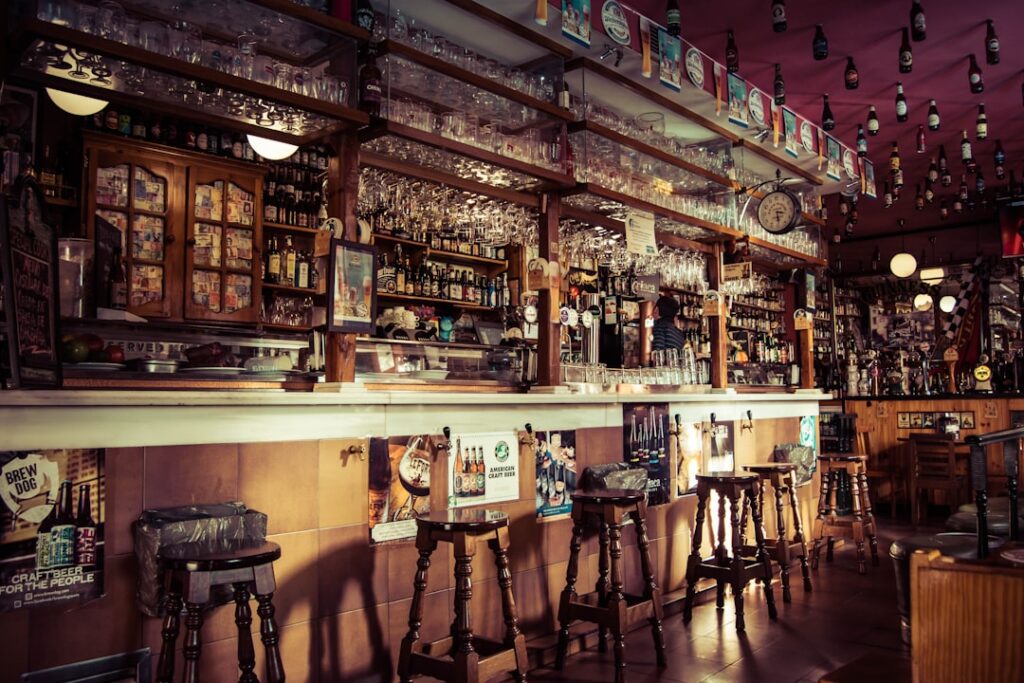
Then head to El Tubo for dinner. This is not one street but a dense knot of lanes around Calle Estébanes and adjoining alleys, and it works best if you do not over-plan. That said, specifics help. Bodegas Almau on Calle Estébanes is a fine place to begin, especially if you like the old-school feel of a vermouth bar with character. La Ternasca is a reliable choice if you want something more substantial and unapologetically Aragonese. Most places get going from around 19:00 and continue until midnight.
The point of El Tubo is movement. One drink here, one tapa there, then on again. It can be loud, narrow and occasionally chaotic, which is part of its charm. If you expect polished gastro-minimalism, you are in the wrong district. If you want the smell of frying, the clatter of plates and the sensation that everyone else already knows where they are going, it is exactly right.
What should day two look like if you want more than churches and old stones?
Begin at the Museo Pablo Gargallo, roughly a 10-minute walk from Plaza del Pilar. It is housed in the handsome Palacio de Argillo and opens Tuesday to Saturday from 10:00 to 14:00 and 17:00 to 21:00; on Sundays and public holidays it opens from 10:00 to 14:30; Mondays closed. Admission is €4, reduced €3, and free for children under 8.
Gargallo is one of those artists visitors often know less well than they should. His sculpture, especially the metal masks and hollowed forms, feels unexpectedly modern once you see it in person. The museum is compact enough to work well in a short itinerary and gives you a break from the ecclesiastical grandness of day one.
From there, walk about 15 minutes from the Plaza del Pilar area to the IAACC Pablo Serrano. It is free, which immediately lowers the psychological barrier to visiting, and the hours are generous: Tuesday to Saturday from 10:00 to 14:00 and 17:00 to 21:00; Sundays and public holidays from 10:00 to 14:00; Mondays closed. The building itself has a bold, contemporary presence, and the collection shifts the conversation from medieval and baroque Zaragoza to 20th-century Aragonese creativity.
This is also where many visitors realise the city is less conservative in spirit than they assumed. Zaragoza can look monumental and old-fashioned from the outside, but its art institutions are thoughtful, unfussy and refreshingly accessible. If your image of the city was all basilicas and military history, this second morning should correct it.
Where do you eat well on day two, and how do you survive a Zaragoza summer afternoon?
If you want a special lunch, book La Prensa on Calle José Nebra 3. It serves Tuesday to Saturday from 13:30 to 15:30 and 20:30 to 22:30, and it is closed Sundays and Mondays. This is your fine-dining option, a Michelin-starred address that gives a more polished interpretation of regional ingredients. It is not in the old centre, so this is a meal to plan rather than stumble into, but that slight detour can be part of the pleasure.
Summer in Zaragoza is all about respecting the afternoon. Locals do not march around stone plazas at 3pm for fun, and neither should you. After lunch, the best move is a slower one: Parque Grande José Antonio Labordeta, about 25 minutes on foot from Plaza del Pilar, though in the heat you may prefer a taxi. Opened in 1929, it is the city’s largest park and an important reminder that Zaragoza is greener than many short-stay visitors realise.
What I like here is not only the scale but the social mix. Older couples walk under the trees, runners thread past monumental stairways, and families claim patches of shade. It is a place to decompress after two mornings of monuments. The park’s avenues, gardens and viewpoints also show a different civic ambition from the old quarter: less medieval drama, more 20th-century urban confidence.
For dinner, El Cachirulo on Carretera de Logroño, km 1.5, is one of the classic names for traditional Aragonese cooking in a distinctly old-school setting. It opens Tuesday to Saturday from 13:30 to 15:30 and 20:30 to 23:00, and on Sundays from 13:30 to 15:30; closed Mondays. If day one was for bar-hopping in El Tubo, this is where you sit down and let the evening be more formal.
Where to stay in Zaragoza old town if you want to walk everywhere?
If your priority is being able to do almost everything on foot, stay between Plaza España, El Tubo and the Pilar side of the old centre. This is the sweet spot for a short break: you can reach the major monuments easily, return to your room in the hottest part of the day, and go out again for tapas without thinking about transport. It also gives you that evening atmosphere many visitors otherwise miss by staying in more anonymous business districts.
When people ask me where to stay in Zaragoza old town, I usually tell them to be practical rather than romantic. Pretty streets are lovely, but in summer you also want air-conditioning, easy access, and preferably parking if you are driving. One genuinely useful option is ZaragozaHome at Puerta Cinegia, between El Tubo and Plaza España. It has two apartments, private parking included, a 9.8 rating on Booking.com, and prices from €85 per night. That location is hard to beat for a two-day stay because breakfast, museums, tapas and late-night wandering are all within easy reach.
The old town is generally the right choice for first-time visitors. The only reason not to stay there would be if you specifically wanted a resort-style pool hotel or were planning to spend most of your time outside the centre. For this 2 days in Zaragoza itinerary, central beats scenic every time.
What changes in Zaragoza in summer 2026, and are there any dates worth planning around?
Summer itself is the main event, but if your travel dates are flexible it is worth knowing what comes just before. The Fiestas Goyescas are scheduled for 24 to 26 April 2026, bringing a more theatrical, historical atmosphere to the city. If you happen to be travelling in late spring instead of high summer, that period adds an extra layer of street life and costume to the centre.
For summer visitors, the practical issue is not festivals so much as heat and timing. Aim for early starts, indoor sights late morning, long lunches, and river or park walks in the evening. Zaragoza rewards this rhythm. It is not a city that begs to be conquered at pace; it is a place best understood by adjusting to how it actually lives.
That is perhaps the strongest argument in its favour. A short trip here does not feel like skimming highlights off the top of a destination that demands a week. It feels complete. You can leave after two days with a real sense of the city’s textures: brick and stone, river light, late dinners, Islamic arches, modern sculpture, and the quiet confidence of a place that has never needed to shout for attention.
FAQ
Is two days enough for Zaragoza?
Yes. Two days is enough to see the main historic sights, enjoy El Tubo properly, visit at least two art museums and still have time for the riverfront or Parque Grande. The centre is compact and easy to walk.
What is the best area to stay in Zaragoza for a short trip?
The old town around Plaza España, El Tubo and Plaza del Pilar is the most practical area for a short stay. It lets you walk to the main monuments, restaurants and tapas bars, and it is especially convenient in summer when returning to your accommodation for a midday break matters.
Do you need to book restaurants in Zaragoza?
For classic restaurants such as Casa Lac, La Prensa and El Cachirulo, yes, especially for dinner and weekend lunches. For tapas in El Tubo, booking is usually less important because the whole point is to move between bars.
Stay right between El Tubo and Plaza España
If you want a practical, central base for a summer break, these Puerta Cinegia apartments make day-to-day Zaragoza easy: walkable old-town location, private parking included, excellent reviews and rates from €85 per night.
Looking for accommodation in central Zaragoza? Our ZaragozaHome apartments are steps from the Pilar, La Seo and El Tubo. Private parking included and rated 9.8 on Booking.com.