Aljaferia Palace Zaragoza in Spring: The Best Monument Route from the Old Town
Planning a spring city break in Zaragoza? This guide shows you how to visit Aljaferia Palace Zaragoza from the old town, with a beautiful monument route, practical details and smart advice on where to stay in Zaragoza old town.
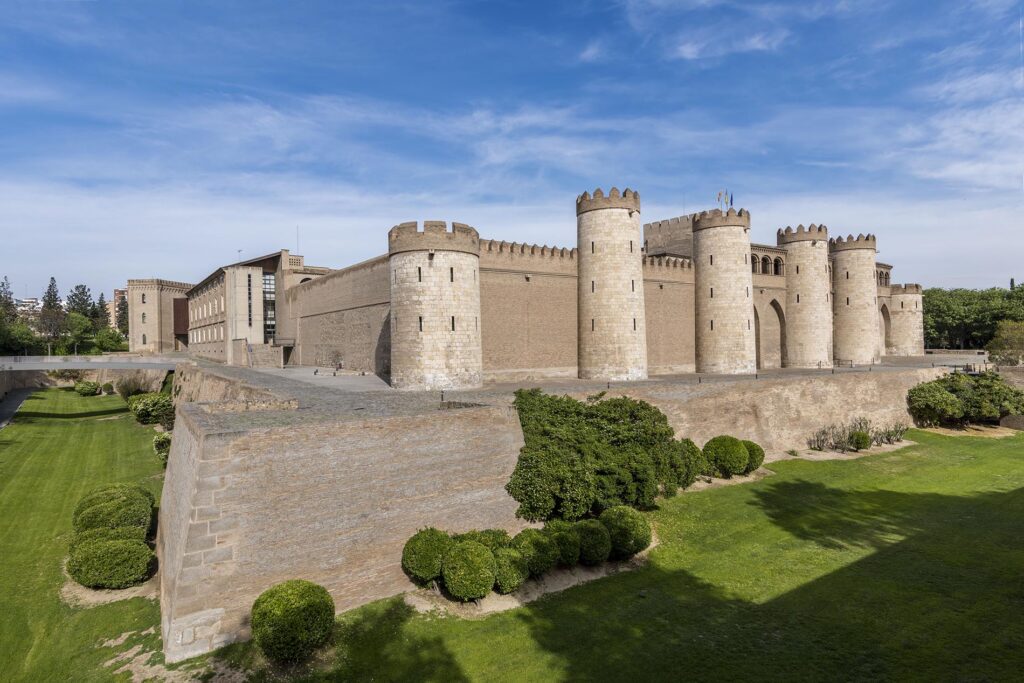
Aljaferia Palace Zaragoza is one of those places that makes you stop mid-walk and wonder how one city can hold so many layers of history at once. Just a pleasant stroll from the old town, this fortified palace began life in the 11th century as an Islamic pleasure palace and today stands as one of the most extraordinary monuments in Aragon.
Spring is easily the loveliest season to do the route on foot. The light is softer, the gardens begin to green up, and temperatures are usually ideal for wandering between Roman ruins, Mudéjar towers and broad avenues without the fierce heat of high summer. If you are deciding where to stay in Zaragoza old town, location matters more than you might think: being close to Plaza España, El Tubo and the Basilica del Pilar means you can start early, pause for tapas, and reach the palace on foot without needing public transport at all. That is exactly why many visitors like the Puerta Cinegia area, where Zaragoza Home’s design apartments place you right between the city’s great monuments and its best food streets.
Why visit Aljaferia Palace Zaragoza in spring?
Aljaferia Palace Zaragoza is worth visiting at any time of year, but spring gives the monument a special atmosphere. The palace sits slightly west of the historic core, and the walk from the old town feels particularly rewarding in March, April and May, when Zaragoza enjoys longer daylight hours and generally comfortable temperatures for sightseeing. Instead of rushing from one landmark to another, you can turn the visit into a proper monument route, seeing the city unfold chronologically from Roman Zaragoza to Islamic Saraqusta, then Christian medieval and modern Zaragoza.
The palace itself is a rare surviving example of an 11th-century taifa palace in Spain. Built in the second half of the 11th century under the Banu Hud dynasty, it later became a residence of the Christian kings of Aragon after Zaragoza was conquered by Alfonso I in 1118. The Catholic Monarchs added their own palace within the complex in the late 15th century, so the site is not a single-period monument but a remarkably complete summary of Spanish history in stone, stucco, wood and brick.
Spring also makes the details easier to enjoy. You are more likely to linger in the courtyard, notice the carved horseshoe arches, or appreciate the changing textures of the walls and towers without battling summer glare. It is a good season for photographers too, especially in the morning.
- Best season for walking: mild weather and longer days
- Best light for photos: morning and late afternoon
- Best way to visit: combine the palace with Pilar, La Seo and the Roman remains
- Best base: central old town, especially near Plaza España and El Tubo
If you are considering where to stay in Zaragoza old town, spring is also when a walkable base really pays off. From Puerta Cinegia, for example, El Tubo is literally at the front door, the Basilica del Pilar is about 3 minutes on foot, and La Seo with the Roman Forum is around 5 minutes away, making it very easy to build a full day around Aljaferia Palace Zaragoza.
Walking route from Plaza del Pilar to Aljaferia Palace Zaragoza
The beauty of this route is that it starts with Zaragoza’s most iconic postcard view and ends at one of Spain’s least expected palaces. Begin in Plaza del Pilar, one of the largest pedestrian squares in Europe, where the Basilica del Pilar and La Seo stand within a few minutes of each other. From here, head south-east only briefly if you want to glance at the Roman Forum Museum area, then make your way towards Plaza España and continue west along the broad urban axis that leads towards the palace.
From the old town centre, the walk to Aljaferia Palace Zaragoza is usually around 20 to 25 minutes, depending on your starting point and stops along the way. From Plaza España it is roughly 1.5 kilometres. The route is straightforward, mostly flat, and well suited to visitors who prefer seeing a city gradually rather than taking a taxi straight to the door.
Suggested spring monument route on foot
- Basilica del Pilar – start early for quieter views and beautiful morning light
- La Seo Cathedral – one of the finest places in the city to understand Zaragoza’s Mudéjar heritage
- Roman Forum area – ideal for connecting the city’s Roman roots to what you will later see at the palace
- Plaza España – practical midpoint and easy orientation point
- Aljaferia Palace Zaragoza – finish with the city’s great Islamic and royal complex
How long does the full route take?
Allow around half a day if you plan to visit only the exterior of the churches and a full 45 to 90 minutes inside the palace. If you add cathedral interiors, museums or a long lunch in El Tubo, it becomes an excellent full-day plan. That is another reason travellers researching where to stay in Zaragoza old town often prefer accommodation near the historic centre: you can return for a break and head out again for sunset by the Pilar.
If you are staying at Zaragoza Home near Plaza España, the route is particularly easy. You can start with breakfast in the centre, walk to Pilar in minutes, spend the morning on the monument trail and still be back close to El Tubo for lunch without any complicated logistics.
Inside Aljaferia Palace Zaragoza: what not to miss
Once inside Aljaferia Palace Zaragoza, it helps to know what you are looking at, because this is not just a castle. It is an architectural palimpsest, where each era added something significant. The oldest surviving section is the Islamic palace commissioned by the ruler Abu Ja’far al-Muqtadir in the 11th century. Its most famous spaces include the courtyard, the richly decorated arches and the mosque or oratory, a rare surviving private Islamic prayer space within a palace setting.
The complex changed profoundly after the Christian conquest, and again under the Catholic Monarchs. Their palace introduced late Gothic and Mudéjar influences and speaks to the building’s continued political importance. Since 1987, the Aljaferia has also housed the Cortes de Aragón, the regional parliament, which adds an interesting modern institutional layer to the experience.
Highlights to look out for
- The Troubadour Tower – the oldest part of the complex, dating largely to the 9th century, before the taifa palace itself
- The Islamic courtyard – calm, balanced and one of the most atmospheric spaces in the monument
- The oratory – small in size but hugely important historically
- The hall of the Catholic Monarchs – an insight into royal ceremonial space after the medieval reconquest
- Mudéjar and plaster decoration – some of the finest details are overhead and around doorways, so keep looking up
One of the joys of visiting in spring is that you are less likely to feel rushed. Even if you are not an architecture specialist, the palace rewards slow observation. Notice how defensive military elements coexist with delicate courtly decoration. This contrast is part of what makes Aljaferia Palace Zaragoza so memorable and so different from many better-known Spanish monuments.
For travellers weighing up where to stay in Zaragoza old town, this is precisely the kind of sight best visited from a central base. You can see the palace in the morning, return to rest, then spend the evening by Pilar or eating tapas in El Tubo instead of losing time crossing the city from an out-of-centre hotel.
Best things to see between the old town and the Aljaferia
The route to Aljaferia Palace Zaragoza is not simply a transfer from A to B. It is one of the best ways to understand Zaragoza as a city of overlapping civilisations. Start in the old town and you are immediately in a landscape shaped by Roman Caesaraugusta. The remains around the forum area, together with nearby museums dedicated to the Roman theatre, forum, baths and river port, show how deeply the Roman grid still underpins the city.
Move through the historic centre and you reach Christian Zaragoza at its grandest. The Basilica del Pilar, linked to one of Spain’s most important Marian devotions, dominates the urban skyline, while La Seo reveals layers from Romanesque to Gothic, Mudéjar and Baroque. In fact, the Mudéjar monuments of Aragon were inscribed on the UNESCO World Heritage list in 1986, with an extension in 2001, and La Seo is one of the essential stops for understanding that tradition before you continue towards the palace.
Then comes the transition westwards, where the city opens out and the massive form of the Aljaferia begins to appear. It is a striking arrival: broad avenues, modern city life, and suddenly a fortified palace with an unmistakably Islamic origin. Few urban walks in Spain compress so much history into such a manageable distance.
Monuments to combine in one day
- Basilica del Pilar – 3 minutes on foot from Puerta Cinegia
- La Seo – about 5 minutes on foot from the same central area
- Roman Forum Museum area – also around 5 minutes from central old town lodging
- Aljaferia Palace Zaragoza – around 20 to 25 minutes on foot from the heart of the centre
If your main question is still where to stay in Zaragoza old town, choose somewhere that lets you do all of this without relying on buses. A central address around Plaza España is ideal because it connects the monumental core with the walk west to the palace. That convenience is one reason visitors often book these centrally located Zaragoza apartments, especially when they want a practical base for monuments and tapas in equal measure.
Practical information
Before setting out for Aljaferia Palace Zaragoza, it is worth checking the latest official timetable, because this monument also functions as the seat of the Aragonese parliament and schedules can occasionally vary. That said, the standard visitor information is straightforward and makes planning easy.
Aljaferia Palace Zaragoza opening hours
The usual public opening hours are:
- April to October: 10:00 to 14:00 and 16:30 to 20:00
- November to March: 10:00 to 14:00 and 16:00 to 18:30
These are the commonly published seasonal hours, but always verify before your visit in case of institutional events or holiday changes.
Aljaferia Palace Zaragoza ticket prices
- General admission: 5 euro
- Reduced admission: 1 euro
- Guided visit supplement: may vary depending on format and language
Prices can be updated, so it is wise to confirm on the official site or at the ticket office. Even so, Aljaferia Palace Zaragoza remains one of the best-value major monuments in Spain considering its historical significance.
How to get there from the centre
From Plaza del Pilar or Plaza España, walking is the simplest option for most visitors. Expect around 20 to 25 minutes on foot from the historic core. If you prefer public transport, several urban bus and tram-connected routes through the centre can help you get close, though exact lines may change over time. Taxis are quick and inexpensive for short inner-city journeys.
Recommended visit duration
Allow 45 to 90 minutes inside the palace itself. If you enjoy architecture, photography or reading the interpretation panels carefully, 90 minutes is more realistic. Add another half hour if you want to take your time around the exterior and grounds.
Useful visiting tips
- Go early in the day for softer light and a calmer atmosphere
- Wear comfortable shoes because the best approach is on foot from the old town
- Pair the palace with Pilar and La Seo for a full historical route
- Spring mornings are ideal for the walk; carry a light layer for cooler evenings
If you are planning around where to stay in Zaragoza old town, staying central also solves a practical issue: parking. In the Puerta Cinegia area, Zaragoza Home includes private parking at Plaza España at no extra charge, which is genuinely useful if you are arriving by car but want to do the monument route entirely on foot afterwards.
Where to stay in Zaragoza old town for a spring monument break
When visitors ask where to stay in Zaragoza old town, the best answer is usually: as central as possible, but still comfortable enough to return to between walks. For a spring trip focused on monuments, a base near Plaza España gives you the right balance. You are close to the monumental heart around Pilar and La Seo, but also well positioned for the walk to Aljaferia Palace Zaragoza.
That is why Puerta Cinegia works so well. This area sits between the old town’s grand sights and its liveliest food streets. El Tubo, Zaragoza’s famous tapas quarter, is under 1 minute on foot if you are staying in the building itself, which means you can finish your palace route and reward yourself with dinner almost immediately. The Basilica del Pilar is only around 3 minutes away on foot, and La Seo with the Roman Forum is about 5 minutes.
For travellers who want style as well as practicality, Zaragoza Home offers two design apartments in this exact location. They currently hold an excellent 9.8 rating on Booking.com and a Traveller Review Award 2026, with rates from 75 GBP per night. The inclusion of private parking at Plaza España at no extra charge is especially valuable in the centre, where parking can otherwise complicate a city break.
Most importantly, this sort of base changes the rhythm of your trip. Instead of seeing the city in isolated fragments, you can walk naturally from breakfast to monuments, back for a rest, then out again to see the Pilar illuminated at dusk. If your priority is where to stay in Zaragoza old town for an easy, elegant spring itinerary, this is one of the smartest areas to choose.
FAQ: visiting Aljaferia Palace Zaragoza
How far is Aljaferia Palace Zaragoza from the old town?
From the heart of the old town, such as Plaza del Pilar or Plaza España, the walk is usually around 20 to 25 minutes. From Plaza España it is roughly 1.5 kilometres, making it very manageable on foot in spring.
Is Aljaferia Palace Zaragoza worth visiting?
Yes, absolutely. It is one of the most important Islamic palaces in Spain, with later Christian and royal additions that make it historically exceptional. Few monuments in Zaragoza explain the city’s layered past so clearly.
How much time do you need at Aljaferia Palace Zaragoza?
Most visitors need between 45 and 90 minutes. If you enjoy architecture, guided visits or photography, plan closer to 90 minutes so you can appreciate the Islamic palace, the Troubadour Tower and the Catholic Monarchs’ rooms properly.
Can you walk from the Basilica del Pilar to Aljaferia Palace Zaragoza?
Yes, and it is one of the best ways to visit. The route lets you connect Pilar, La Seo and the Roman remains with the palace in a single half-day or full-day itinerary, especially enjoyable in spring.
Stay steps from Pilar and make the Aljaferia route effortless
For a spring monument break, staying in the right place makes all the difference. Zaragoza Home’s design apartments at Puerta Cinegia put you 3 minutes from the Basilica del Pilar, 5 minutes from La Seo and the Roman Forum, and within easy walking distance of Aljaferia Palace Zaragoza. With El Tubo at the front door, private parking at Plaza España included and rates from 75 GBP per night, it is a wonderfully practical base for exploring the city on foot.
Looking for accommodation in central Zaragoza? Our ZaragozaHome apartments are steps from the Pilar, La Seo and El Tubo. Private parking included and rated 9.8 on Booking.com.