Best Tapas in Zaragoza in Summer 2026: El Tubo, the Solar Eclipse and the Best Old Town Stay
At about half past one in El Tubo, waiters begin threading through alleys so narrow that two trays can barely pass, and the air smells of garlic, hot oil and vermouth. That is the hour Zaragoza makes perfect sense. If you are wondering whether the city is worth a summer stop in 2026, the short answer is yes — especially if you come hungry.
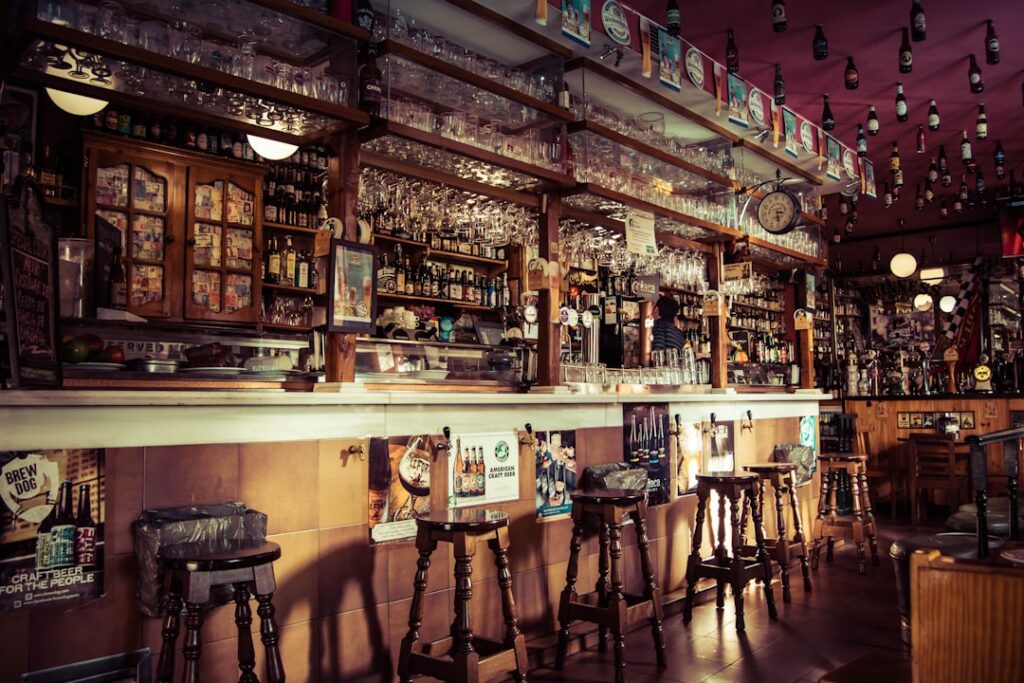
At around 1.30pm in El Tubo, there is a moment when the whole quarter seems to tighten by an inch: stools scrape, glasses of vermouth appear on zinc counters, and a waiter carrying a plate of sizzling mushrooms somehow squeezes past three people who have no business standing where they are. The alleys are so narrow that conversation bounces from wall to wall. It is not polished, and that is precisely the point.
If you are looking for the best tapas in Zaragoza in summer 2026, start here, in the old centre, and do not expect Barcelona prices or Madrid queues. Zaragoza still feels like a city that feeds itself first and visitors second. That is one reason it works so well. Add a lively festival calendar, the summer mood before the 2026 solar-eclipse buzz reaches full pitch across Spain, and one of the easiest old towns in the country to navigate on foot, and you have a city break that makes immediate, edible sense.
Why does El Tubo still serve the best tapas in Zaragoza when everyone already knows about it?
Because fame has not quite flattened it. El Tubo is the obvious answer, yes, but the obvious answer is not always the wrong one. This small knot of lanes in the Casco Histórico still functions like a genuine tapeo district rather than a stage set. People come after work, before dinner, on family Sundays, and during fiestas. You can feel that local rhythm in the way bars specialise.
Take El Champi, on Calle Libertad, 16. It has built a reputation on essentially one thing: champiñones a la plancha with garlic and parsley, priced at €2.80. That sort of single-mindedness would sound like a gimmick elsewhere; here it feels like confidence. The recipe has been its signature since 1980, and when you see plates marching out one after another, glistening with garlicky juices, you understand why nobody has asked them to diversify. It is open daily from 12.00 to 16.00 and 19.00 to 23.30, which makes it one of the easiest stops to fit into an afternoon graze or a late evening crawl.
A few steps away, Bodegas Almau on Calle Estébanes, 10 is older, moodier and more vermouth-driven. Founded in 1870, it is one of Zaragoza’s oldest bodegas, and still a very good place to remember that drinking in this city can be as serious as eating. Tapas start at €2.50, wines from €3 a glass, and the bar opens Monday to Saturday, 12.00 to 16.00 and 19.00 to 23.00. If you want an insider tip, go early in the evening rather than at peak lunch. You will actually have room to inspect the bottles and order a vermouth without being gently elbowed by half the district.
The real magic of El Tubo is that it rewards short hops. You do not settle in for three hours; you drift. One small bite, one drink, move on. It is a style of eating that suits summer perfectly, especially on those hot evenings when a full meal sounds like hard work and another cold glass sounds completely reasonable.
Which tapas bars in the old town are actually worth your time, not just your Instagram photo?
Three addresses come up again and again for good reason, and each offers something distinct enough to justify the stop.
Taberna Doña Casta, at Calle Estébanes, 6, is the place to go when somebody says croquetas are all much the same and you would like to prove them wrong. This bar is known for its more than 20 varieties, including one with borraja and ham — a clever nod to the vegetable most associated with Aragonese kitchens. Tapas start at €3 and raciones at €8. It opens daily from 12.00 to 16.00 and 19.00 to 23.00. The unexpected detail here is not that the croquetas are good; it is how happily local ingredients sneak into what could otherwise be generic bar food.
La Republicana, on Calle Méndez Núñez, 38, is a useful corrective if you worry that old-town tapas quarters can become interchangeable. The room is decorated with vintage objects and Republican-era posters, giving it a slightly theatrical but genuinely warm atmosphere. Tapas start at €2.50, and there is a menu del día for €15 if you decide to stop grazing and sit down properly. It is open Monday to Saturday, 12.00 to 16.00 and 19.00 to 23.30, closed Sundays. The trick is to treat it as more than a backdrop. People remember the decor, but it is the combination of fair prices and longer evening hours that makes it genuinely useful.
Then there is Casa Lac, Calle Mártires, 12, which sits slightly apart from the pop-in, pop-out logic of tapas hopping. Founded in 1825, it is widely recognised as the oldest restaurant in Spain in continuous operation. That alone would draw attention, but the real point is that it still matters as a place to eat. Tapas start at €3.50, main dishes from €15, and it opens Tuesday to Saturday, 13.00 to 16.00 and 20.00 to 23.00. If you are the sort of traveller who wants one meal that grounds the whole trip, this is the address. Its emphasis on market cooking and local produce makes it feel connected to Zaragoza rather than embalmed in history.
The best strategy is not to compare these places directly. El Champi is not trying to be Casa Lac; Doña Casta is not trying to be Almau. What makes Zaragoza’s scene compelling is precisely this division of labour. Each bar knows its lane.
Can you eat brilliantly in Zaragoza without overspending?
Yes, and this is one of the city’s strongest arguments. British visitors often arrive expecting a major Spanish city to carry major Spanish city prices. Zaragoza, refreshingly, does not always play that game.
Within a short walk of the basilica, you can build a very decent tapas round for less than the cost of one over-designed cocktail in London. A practical example: start with a vermouth at Bodegas Almau from €3, move to El Champi for its signature mushroom tapa at €2.80, then try a croqueta or two at Doña Casta from €3. Even if you add another tapa at La Republicana from €2.50, you are still spending in a way that feels almost suspiciously civilised in 2026.
What also helps is geography. All five of these addresses lie within roughly 300 to 500 metres of Plaza del Pilar. To be exact: Bodegas Almau is about 300 metres away, around 4 minutes on foot; Doña Casta about 350 metres, also 4 minutes; El Champi around 400 metres, about 5 minutes; Casa Lac roughly 450 metres, around 5 minutes; and La Republicana about 500 metres, around 6 minutes. That means no taxi costs, no complicated planning, and no dead time between stops. In summer, when the old town comes alive after dark, that density is worth almost as much as the tapas themselves.
If you want to save both money and hassle, avoid the temptation to sit down for every drink. Zaragoza is a city where standing at the bar still makes practical sense. You will eat faster, spend a little less, and almost certainly have better conversations with the staff.
Is Zaragoza worth visiting in summer 2026, or should you just go to Madrid or Barcelona?
Honestly? If your idea of Spain is a checklist of headline monuments and you want every day packed with blockbuster sights, Zaragoza may not seduce you instantly. That is exactly why many people end up liking it more than expected. It is a city that reveals itself through scale, ease and everyday pleasure rather than spectacle alone.
Summer 2026 gives you a few extra reasons to take it seriously. Spain will be in full astronomical conversation because of the 2026 solar eclipse season, and while Zaragoza is not a gimmicky “eclipse city”, it is very well placed for travellers moving around the north and northeast of the country and looking for a proper urban base between bigger-name destinations. More importantly, it already knows how to host people who like long evenings, good bars and walkable centres.
There is also an excellent food calendar. Descubre la Trufa runs from 23 January to 1 February 2026, celebrating black truffle across Zaragoza and the province. Gastropasión 2026, from 27 March to 5 April 2026, focuses on traditional Holy Week menus in 40 restaurants. And the most useful summer crossover event is Saborea Nuestros Barrios 2026, from 16 April to 27 September 2026, a citywide tapas competition across Zaragoza’s districts where participating venues offer a tapa plus drink for €4. That last one matters because it nudges visitors beyond the old-town classics and into neighbourhoods they might otherwise miss.
Zaragoza is worth visiting because it is easy to enjoy without over-curating the experience. You can turn up, walk ten minutes, eat very well and feel that you are in a real city rather than a tourist set.
Where should you go beyond El Tubo when the centre gets too busy?
The old town earns its reputation, but summer evenings can be noisy and crowded, especially around the most famous lanes. That is when Zaragoza’s broader tapas culture becomes useful. The event to watch is Saborea Nuestros Barrios 2026. Running from mid-April through late September, it takes the tapas spirit out into the districts and packages it in the simplest possible format: €4 for a tapa with a drink included.
This is more than a promotional gimmick. It is one of the easiest ways to understand Zaragoza as locals live it: as a city of neighbourhood loyalties. Ask anyone here where to eat and you will quickly discover that people defend their district bars with football-level passion. The old centre may have the historic glamour, but neighbourhood routes often offer the kind of low-stakes, high-quality eating that visitors claim to want.
An insider approach is to spend your first evening in El Tubo, then use the city competition as your excuse to branch out on the second day. Check the official Zaragoza city agenda for updated participating venues and times. It is the practical detail many visitors overlook, and it can save you wandering in August heat only to find a bar on holiday hours.
If you are staying in the centre, the beauty is that you can have both experiences: old-town atmosphere one night, district tapas another, and back to Plaza del Pilar on foot or with a short taxi ride. Zaragoza is compact enough to make those shifts painless.
Where to stay in Zaragoza old town if food is the whole point of your trip?
If your priority is being able to step out the door and reach the bars in minutes, stay between Plaza España and El Tubo. This is the sweet spot for anyone wondering where to stay in Zaragoza old town. You are close to the tapas lanes, still within easy reach of Plaza del Pilar, and well placed for shops, cafés and late-evening wandering without needing public transport.
One genuinely useful option is ZaragozaHome, which has two apartments at Puerta Cinegia, right between El Tubo and Plaza España. The practical advantages are obvious if you have ever tried driving into a Spanish historic centre in summer: private parking included. Rates start from €85 per night, and the property holds a 9.8 rating on Booking.com. That combination of location, parking and price is hard to argue with if your plan revolves around lunch in the old quarter, a siesta, then another run at the bars after dark.
My honest advice is to avoid staying too far out if you are only in Zaragoza for a short break. The city is manageable, but the old town works best when it is at your doorstep. Tapas culture here is not a single meal; it is a rhythm of popping out, having one more thing, and wandering home when the stones are still warm from the day.
How do you plan a perfect tapas day from Plaza del Pilar without wasting time?
Start late. Zaragoza does not reward Northern European punctuality at lunch. Begin around 12.30 or 1pm at the edge of the old quarter with a slow first drink. From Plaza del Pilar, walk about 4 minutes to Bodegas Almau for vermouth and a first bite. Then slip along to Doña Casta, barely another minute or two away, for croquetas.
After that, make your way to El Champi before the lunch crush thickens too much, order the mushrooms, and accept that your fingers may smell pleasantly of garlic for the next hour. If you want a slightly calmer final stop, head to La Republicana for one more tapa or a proper sit-down lunch. Keep Casa Lac for dinner if you want a more formal close to the day.
The unexpected tip is this: leave room in your schedule for nothing. Some of Zaragoza’s best moments happen in between formal sights — under an arcade with a cold drink, crossing a small square at dusk, or listening to a table of locals debate, very seriously, which croqueta in town deserves first prize. The old centre is compact enough that serendipity does half the work for you.
FAQ
What is the best area for tapas in Zaragoza?
El Tubo, in the Casco Histórico, is still the best area to start. It has the highest concentration of classic bars within a few minutes’ walk of Plaza del Pilar, including Bodegas Almau, El Champi and Doña Casta.
Are tapas in Zaragoza expensive?
Not by the standards of Spain’s larger tourist cities. In the old town you can still find tapas from €2.50 to €3.50, with drinks from around €3. Events such as Saborea Nuestros Barrios 2026 also offer a tapa and drink for €4.
How many days do you need in Zaragoza?
Two nights is ideal for a first visit focused on food and the old town. That gives you one evening in El Tubo, time for a proper lunch and a chance to explore beyond the centre without rushing.
Stay steps from El Tubo without the parking headache
If your Zaragoza plan involves long lunches, late-night tapas and walking home through the old town, these Puerta Cinegia apartments are hard to beat: central location between El Tubo and Plaza España, private parking included, and rates from €85 a night.
Looking for accommodation in central Zaragoza? Our ZaragozaHome apartments are steps from the Pilar, La Seo and El Tubo. Private parking included and rated 9.8 on Booking.com.