The best terraces in Zaragoza for summer drinks
From shaded tables in Parque del Agua to late-evening vermut in the old quarter, these are the Zaragoza terraces I’d actually suggest to a friend on a hot summer weekend.
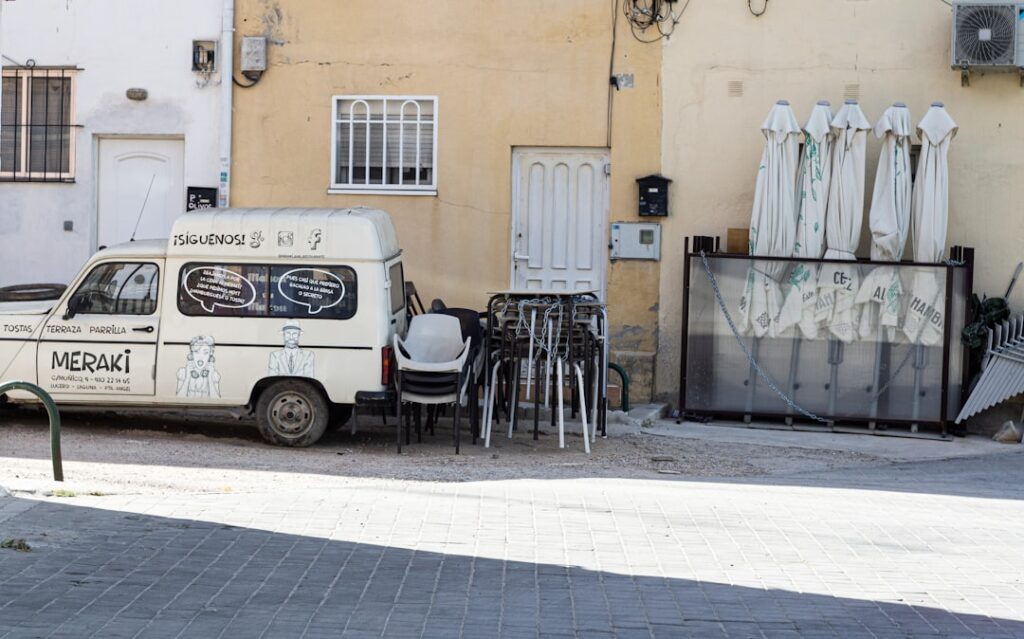
At about half past ten on a July night, when the stone around Plaza Santa Marta is still giving off the day’s heat, Zaragoza becomes one of Spain’s great outdoor drinking cities. Not in the glossy, rooftop-and-DJ way of Madrid or Barcelona, but in a more likeable, more local fashion. Someone is balancing a plate of anchovies through El Tubo, children are still awake in Parque del Agua, and a waiter in San José is laying out the last tables for dinner service because nobody sensible here rushes an evening in summer.
If you’re wondering whether Zaragoza is worth visiting, especially in the hotter months, the honest answer is yes — provided you understand its rhythm. You don’t come here for postcard perfection alone. You come for the ease of it, for long drinks outdoors, for neighbourhood terraces that belong to real life, and for a city that knows exactly how to use a warm night. For anyone searching for the best Zaragoza terraces summer has to offer, this is the version I’d give a friend.
Why do Zaragoza’s summer terraces feel so good after dark?
Part of the answer is climate, and part of it is urban habit. Zaragoza can be ferociously hot by day in summer, but evenings invite everyone back outside. The city is built for that social migration: broad pavements, squares that hold onto life late into the night, and neighbourhood bars that treat the terrace not as an add-on but as an extension of the living room.
The old quarter is the place to notice it first. El Tubo, in the Casco Histórico, is famous for its dense concentration of bars, but what matters in summer is less the checklist of tapas and more the atmosphere in its pedestrian lanes. Streets such as Libertad and Cuatro de Agosto turn into open-air corridors of conversation after sunset. You hear cutlery, ice in glasses, snippets of Aragonese family gossip, and occasionally the scrape of a chair as one more table appears from nowhere.
There’s also a historical reason terraces matter here. The centre’s older streets were designed long before cars dominated them, so sociability naturally spills outwards. Even where the architecture feels grander — around Plaza España or the avenues leading towards Paseo de la Independencia — the custom is the same: drink outside if at all possible. If you’re British, it’s the sort of warm-weather public life that makes you instantly jealous.
One practical detail visitors often miss: the best time is not 7pm but closer to 9.30pm or 10pm, when the air is softer and local life is properly underway. Turn up too early and you may find empty tables and the sense that you’ve arrived before the city has changed gear.
Which central terrace is actually worth sitting on when you don’t want to overthink it?
For sheer convenience, Cafetería Olé Zurita is the kind of place that travellers underestimate and locals keep using. It sits in the Casco Histórico, right in the centre, and that alone matters more than people admit. On a hot day of churches, Roman remains and aimless wandering between Plaza del Pilar and the shopping streets, there’s enormous value in a terrace that requires no planning, no taxi and no long debate.
Olé Zurita opens from Monday to Saturday, 08:00 to 22:00, which makes it unusually useful across the whole day. Need coffee before the city wakes up? It works. Need a late-afternoon beer when museums have closed and your legs are giving up? Also works. The prices are central but still reasonable by big-city standards: a caña at 2.50 euros, vermut at 3.00, and a glass of wine at 2.50. In a Spanish city centre that doesn’t feel remotely extortionate.
What I like most is that it gives you the simplest version of a Zaragoza terrace ritual. Sit down, order something cold, and watch the old quarter move around you. You’re close enough to the main sights to feel in the thick of things, but without committing yourself to the full squeeze and noise of El Tubo. If you’ve just arrived in town and want to take the measure of the place, this is a smart first stop.
The insider trick is to use it as a bridge between the monumental and the everyday. Too many visitors do Pilar, perhaps La Seo if they are diligent, then disappear indoors. A terrace like this reminds you that Zaragoza’s real talent is not only in what you visit, but in how naturally you can pause between things.
Where should you go if you want a terrace with shade, space and children still running about at 10pm?
Bámbola Restauración, in Parque del Agua, is where I’d send anyone who wants to understand why summer evenings in Zaragoza can feel almost absurdly civilised. The setting does a lot of the work. Parque del Agua, created on land transformed for Expo 2008, gives the city a broad, greener social landscape than many first-time visitors expect. Instead of squeezing into a tiny old-town table, you get breathing room, natural shade and the soft background noise of families making a night of it.
Bámbola opens daily from 10:00 to 23:00, and the prices remain refreshingly grounded: caña 1.80 euros, vermut 2.50, wine 2.00. It’s about 3 km from the centre, roughly a 35-minute walk, though in the heat I’d save the walk for later in the evening or hop on public transport.
The place is especially good if you are travelling with children, because the terrace’s proximity to play areas means adults can have something approximating a relaxed drink while younger companions continue burning off energy nearby. That is not a small advantage in Spain in summer, when family life simply stretches later into the night.
There is also something very Zaragoza about drinking here. Parque del Agua still carries traces of the city’s attempt to reinvent itself during Expo 2008, and unlike some post-event landscapes elsewhere in Europe, this one genuinely settled into local use. You feel that at Bámbola: not as a showpiece, but as a lived-in part of the city. Come around sunset and the light across the park can make even a basic beer feel like a good decision.
What if you want a proper neighbourhood terrace rather than the old-town performance?
Then go to Bar Restaurante El Candelas in San José. Visitors often spend too much time asking where the “best” terrace is, when what they really want is one that feels ordinary in the best possible way. El Candelas is a classic barrio bar with traditional cooking, parasols over the terrace and the reassuring sense that it existed before anyone started writing lists about it.
It opens Tuesday to Sunday, 12:00 to 16:00 and 20:00 to 23:00. That split timetable is worth noting because it reflects the local logic of lunch and dinner service rather than all-day tourist grazing. Prices are straightforward: caña 2.00 euros, vermut 3.00, wine 2.50. It sits about 2 km from the centre, around 25 minutes on foot, which makes it an easy detour if you’re staying centrally but want to see a more residential side of Zaragoza.
San José itself is useful for understanding the city beyond its monuments. This is not a district polished for outsiders; it’s a functioning neighbourhood, and that’s exactly its appeal. A terrace drink here shows you the cadence of local life: older couples out for dinner, groups meeting after work, children orbiting scooters and grandparents. If your image of Zaragoza is still limited to basilicas and tapas lanes, El Candelas broadens it nicely.
An unexpected bonus is value for atmosphere. In larger, more tourist-heavy cities, a terrace with this kind of lived-in authenticity would either be impossible to find or aggressively marketed as “hidden”. Here it’s simply there, doing what it does. Order a vermut before dinner service begins in earnest and settle into the fact that not every worthwhile evening needs a famous address.
Is there anywhere for a longer, lazier summer meal with drinks built in?
BuleBar Montecanal is the answer when you’re after less of a quick aperitif and more of a proper terrace session that drifts into lunch or dinner. Montecanal lies well outside the centre by Zaragoza standards, about 6 km away, which translates to roughly 1 hour and 15 minutes on foot. In practical terms, this is somewhere you go on purpose. But that distance is also what makes it appealing: you arrive in a calmer, more residential environment, and the terrace has the scale that central venues often lack.
It opens daily from 11:00 to 23:30 and has a broad terrace with awning cover, a blessing in the Aragonese summer. Drinks are a touch pricier than at some neighbourhood bars but still fair: caña 2.20 euros, vermut 3.50, wine 2.80. What sets it apart is the food focus, especially rice dishes and paellas, which makes it one of the better choices for turning terrace drinks into a full meal.
If you’re spending several days in the city, this is the sort of place that keeps Zaragoza from feeling one-note. Visitors often assume the entire experience is concentrated around the old quarter. In reality, the city’s social life is spread through districts where people actually live, and Montecanal is a good example. The pace slows, the tables are larger, and nobody seems in a hurry to give yours away.
My advice would be to go with enough appetite and enough time. Start with a drink under the awning, order something built for sharing, and let the evening happen. On a hot day, that combination of shade, food and distance from the centre can be exactly what you need.
How do you do El Tubo without ending up in the wrong sort of chaos?
El Tubo is both worth it and easy to get wrong. Worth it because the area really is one of Zaragoza’s defining social spaces; easy to get wrong because if you arrive at the busiest moment expecting serenity, you’ll be annoyed with everyone except yourself. The trick is to treat it as a moving evening rather than a single destination.
Historically, El Tubo’s fame comes from its dense network of bars in the Casco Histórico, especially along streets like Libertad and Cuatro de Agosto, which become natural meeting points on summer nights. That density is the point. You’re not there for one perfect terrace with immaculate personal space. You’re there for the choreography: a drink here, a tapa there, a turn into a side street, another round somewhere with standing room only.
Go later rather than earlier, but not too late if you want to sit. Around 9.30pm is ideal. By 11pm, especially on a Friday or Saturday, the competition for a good outdoor table becomes much more serious. If you’re British and still tempted to eat at 7pm, resist. You’ll only find half the atmosphere and all of your own impatience.
The useful contrast is this: El Tubo is where you feel Zaragoza’s public energy at full strength, while places like Bámbola or El Candelas show its quieter, more neighbourhood side. If you try both, the city makes far more sense. That, more than any one famous bar, is the real insider tip.
Can you build a whole summer evening around terraces and local events?
Very easily, and this is where Zaragoza becomes more compelling than many people expect. Summer here is not just about finding a table outdoors; it’s about how naturally outdoor drinking connects with the city’s cultural calendar.
In 2026, Delicias a la Fresca runs from 20 June to 6 August, turning spaces in the Delicias district into open-air stages for theatre, live music, poetry, cinema and storytelling. It’s exactly the kind of programme that suits Zaragoza: neighbourhood-based, informal and best enjoyed with a drink before or after. A smart plan is to start with an early terrace stop in the centre or San José, then head towards Delicias for the evening event.
HARINERA VERANO 2026 is another excellent excuse to expand your map of the city. Harinera ZGZ opens Monday to Sunday from 10:00 to 21:00 with workshops and cultural activities through the summer. The building itself, a former flour factory turned cultural space, is one of those adaptive-reuse stories that cities love to tell, but here it feels genuinely rooted. Pairing a visit with drinks nearby makes for a less obvious Zaragoza day.
For families, Verano Activo 2026 at the Camping Municipal de Zaragoza runs from 29 June to 11 July for adolescents aged 12 to 15. Even if you’re not directly involved, it’s another sign that summer life in the city extends beyond the tourist core and into practical, lived spaces. That matters when choosing terraces: places such as Bámbola make more sense once you understand how much warm-weather social life happens around parks and municipal facilities.
And if you’re willing to make a bigger excursion, Veruela Verano 2026 offers August concerts at the Monasterio de Veruela, with tickets from 9 euros. It’s not a terrace in Zaragoza itself, but it fits the same summer logic: culture in the evening, drink in hand beforehand or afterwards, and an Aragonese pace that rewards anyone not in a rush.
So, is Zaragoza worth visiting for summer drinks alone?
Honestly, yes — though perhaps not if what you want is a city of polished, photogenic rooftop bars designed for social media first and actual pleasure second. Zaragoza’s charm lies elsewhere. It is worth visiting because drinking outdoors here feels integrated into daily life rather than staged around it. You can sit in the centre for a simple vermut, head to a park for family-friendly space, or cross into a residential district and feel as if you’ve accidentally wandered into somebody else’s normal Thursday evening.
That normality is part of the appeal. Prices are still relatively sane. Distances are manageable. The old quarter gives you energy when you want it, and the outer neighbourhoods give you breathing room when you don’t. Few Spanish cities of this size feel so under-observed by international visitors and yet so immediately easy to enjoy once you understand their rhythm.
If you come expecting spectacle at every turn, you may miss what is best about the place. If you come ready to spend long evenings outside, to eat late, and to let a terrace be the main event rather than a pause between attractions, Zaragoza rewards you very handsomely.
Where should you stay if you want to walk to the best terraces?
If your main plan is to drink well and walk everywhere, stay as centrally as possible. The sweet spot is between El Tubo and Plaza España, where you can reach the old quarter on foot, retreat easily in the heat of the afternoon, and still branch out to other neighbourhoods without much trouble. A genuinely useful option is ZaragozaHome: two apartments at Puerta Cinegia, private parking included, rated 9.8 on Booking.com, with prices from 85 euros a night. For a short summer stay focused on terrace-hopping, that location is hard to improve on.
Stay in the middle of Zaragoza’s best summer evenings
If you want to walk back from El Tubo, Plaza España and the old quarter’s liveliest terraces without thinking about taxis, ZaragozaHome’s Puerta Cinegia apartments are brilliantly placed. You get private parking, excellent reviews and a genuinely useful base for a few days of outdoor drinks and late dinners.
FAQ
What area of Zaragoza is best for summer terraces?
For atmosphere, El Tubo and the Casco Histórico are the best-known areas, especially around Libertad and Cuatro de Agosto. For a more relaxed evening, Parque del Agua and neighbourhood districts such as San José work better.
Are drinks expensive on Zaragoza terraces?
Not particularly. In summer 2026, a caña at Bámbola Restauración is about 1.80 euros, at El Candelas 2.00, at BuleBar Montecanal 2.20, and at Cafetería Olé Zurita 2.50. Vermut generally ranges from 2.50 to 3.50 euros.
Is Zaragoza worth visiting in summer despite the heat?
Yes, provided you adapt to local timing. Sightsee earlier or later in the day, rest in the afternoon if needed, and make evenings the focus. The city’s terrace culture is one of its strongest summer pleasures.
Looking for accommodation in central Zaragoza? Our ZaragozaHome apartments are steps from the Pilar, La Seo and El Tubo. Private parking included and rated 9.8 on Booking.com.