May bank holiday in Zaragoza: the complete weekend guide
The best thing about Zaragoza in May is that the city still feels like it belongs to locals. One minute you are standing under the vast vaults of the Pilar just after the 6:45 opening, the square almost empty except for a few old men discussing football, and ten minutes later you are eating a vermouth-soaked anchovy in El Tubo before most visitors have even found their map. If you are wondering whether a Zaragoza long weekend May trip is actually worth it, the short answer is yes — especially if you like grand history, serious food and a Spanish city that has not been polished into bland perfection.
The best moment to understand Zaragoza comes early, when the stone in Plaza del Pilar is still cool and the bells have only just finished echoing over the Ebro. If you slip into the Basílica del Pilar soon after its 6:45 opening, you will find a place that feels less like a monument and more like part of the city’s daily rhythm: cleaners at work, worshippers moving quietly, and the sort of half-light that makes the gold and marble look theatrical. A Zaragoza long weekend May trip works so well. The weather is warm but rarely punishing, terraces are full, parks are green, and the city’s scale means you can do an enormous amount without ever feeling rushed. For British travellers used to choosing between an over-touristed classic and an underwhelming alternative, Zaragoza sits in a happier middle ground: beautiful, intelligent, excellent for food, and still surprisingly underappreciated.
Is Zaragoza actually worth a bank holiday trip, or is it just a stop between Madrid and Barcelona?
Yes, it is worth it — and probably more than many Spanish cities that get twice the attention. The honest case for Zaragoza is not that it has one headline monument and a long list of filler. It is that the city is unusually complete. You get Roman remains, a major Islamic palace, two of Spain’s most important cathedrals, a genuinely good tapas culture, broad walkable avenues, river views, and enough local life to avoid the faintly museum-like atmosphere that can settle over more obvious weekend destinations.
What tends to surprise first-time visitors is the scale. The Plaza del Pilar is immense, one of the great public spaces in Spain, and yet a few streets away you are in a maze of tight lanes in El Tubo, eating croquettes shoulder to shoulder with office workers. Zaragoza also rewards people who like cities that function for residents. Shops are real shops, bars are not designed around Instagram, and even in spring — arguably the best season for a Zaragoza city break spring itinerary — you are rarely battling the crowds you would face in Seville, Granada or San Sebastián.
If there is a caveat, it is this: Zaragoza does not throw itself at you. It is not a city of instant prettiness in every corner. Some streets are plain, some post-war architecture is forgettable, and you need to know where to look. But that is part of the pleasure. It feels earned. Spend 48 to 72 hours here and the city begins to reveal its layers properly.
Why should you start at the Pilar when everyone else is still asleep?
The Basílica del Pilar is free to enter and open daily from 6:45 to 20:30, which makes it one of the easiest places to build your first morning around. Go early. Really early. By mid-morning the square has coaches, school groups and the full civic spectacle. At opening time it feels intimate in a way such a huge church should not.
The reason the building matters is not just architectural scale, though the scale is extraordinary. According to tradition, this is where the Virgin Mary appeared to the apostle Santiago in the year 40 AD, making it one of the foundational Marian sites of Spain. Even if you are not remotely religious, that story explains why the Pilar occupies such a powerful place in the Aragonese imagination.
An insider detail many visitors miss: the exterior is magnificent from the square, but the best perspective is often from the opposite side of the river at first light, when the domes and towers catch the sun and the Ebro still looks half asleep. Afterwards, walk back across the bridge and have coffee nearby before the city wakes fully.
The Pilar is also useful geographically. You are standing right in the historic heart of Zaragoza, with La Seo, the Roman forum remains, the market streets and El Tubo all within easy walking distance. For a bank holiday weekend, that matters. Zaragoza is a city where the centre works hard for the visitor: you lose very little time in transit if you stay central and plan sensibly.
Why is the Aljafería the most important building in Zaragoza, even if the Pilar gets the postcards?
If you only pay for one monument, make it the Aljafería. The palace sits around 1.5km from Plaza del Pilar, about a 20-minute walk if you stroll west through the centre, and it is one of the very few major surviving examples of Islamic palace architecture in Spain outside Andalusia. That alone should make it a priority.
The practical details are refreshingly straightforward. It opens daily from 10:00 to 14:00 and again from 16:30 to 20:00. Tickets are €5 for adults, €1 for students and pensioners, and free for children under 12. For a building of this significance, the price feels almost absurdly modest.
Historically, the Aljafería tells Zaragoza’s story better than almost anywhere else. Built in the 11th century as a fortified palace for the Banu Hud rulers of the Taifa of Zaragoza, it later became a royal residence under Christian kings and today houses the Aragonese parliament. That sequence — Islamic court, Christian adaptation, modern political institution — is not a footnote. It is the city in miniature.
The unexpected detail here is how delicate parts of it feel. People arrive expecting a fortress and leave remembering horseshoe arches, carved plasterwork and courtyards that hint at a more refined world behind the defensive walls. Try to visit either soon after the morning opening or later in the afternoon; the softer light flatters the interiors and the place feels calmer. It is also one of the sites that most convincingly answers the question of whether Zaragoza is worth visiting. Any city with a monument this significant and this under-visited has an argument already won.
Where should you actually eat in El Tubo without falling into the usual tourist shuffle?
El Tubo is the answer people give when asked where to eat in central Zaragoza, and for once the obvious answer is the right one. But the trick is not to treat it as a single destination. It works best as a slow bar crawl through a handful of specific addresses.
Start with Bodegas Almau on Calle Estébanes, a handsome old-school spot known for anchovies and local wines. It is exactly the kind of place that reminds you why tapas culture depends on appetite and pacing rather than one giant meal. Then move to Taberna Doña Casta, where the house speciality is croquetas, and not in a token way: people come specifically for them. If you want something more rooted in Aragonese cooking, La Ternasca is the name to know, especially for ternasco de Aragón, the region’s prized young lamb.
The insider tip is to avoid trying to do El Tubo at the most obvious hour. If you arrive too early, some places feel half asleep; too late on a holiday weekend, and you spend more time hovering than eating. Late morning into early afternoon works beautifully, especially after a visit to the Pilar or La Seo. Order small, stand if necessary, and do not lock yourself into one bar unless you are settling for a proper meal.
One of Zaragoza’s great strengths as a food city is that it has retained ordinary local habits. Vermouth still matters. Garnacha from nearby Campo de Borja still matters. So do simple combinations that sound almost too basic to travel for until you taste them in the right place. This is not a city of culinary theatre. It is better than that. It is a city where eating well still feels normal.
What can you realistically see in one long weekend without turning the trip into a checklist?
The smart answer is: more than you think, if you keep the centre as your anchor and save one outer excursion for later in the trip. Zaragoza rewards compact planning.
Day one: start at the Pilar early, then walk the old quarter before the heat builds. Drift towards El Tubo for lunch, take a slower afternoon, and finish with an evening paseo along the Ebro. The city looks especially handsome at dusk, when the riverfront softens the harder edges of the urban fabric.
Day two: make the Aljafería your morning priority. Because it is only about 20 minutes on foot from Plaza del Pilar, you do not need to overthink the logistics. Afterwards, return to the centre for lunch and leave the rest of the day open for whichever kind of traveller you are: museum person, café person, church person, or simply someone who wants to sit on a terrace and watch Zaragoza be itself.
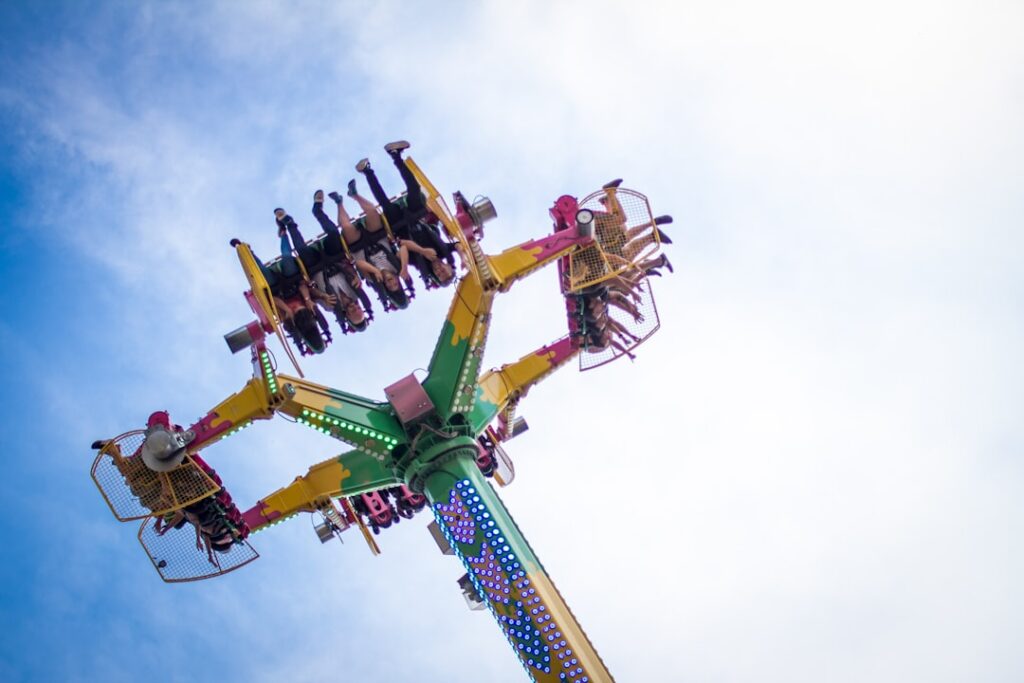
Day three: choose between a spring event, a family outing, or more food. If you are travelling with children, the Parque de Atracciones de Zaragoza is a practical option rather than a must-see landmark. It lies roughly 5km from the centre, around 15 minutes by car or 40 minutes by public transport. In May it usually opens weekends and holidays from 11:00 to 21:00. Prices are clear enough: a Pulsera Superdiversión for visitors over 110cm costs €29.50 on weekends and holidays, while the Chiquidiversión for children under 110cm is €19. An entry with two tickets costs €6. It is not the reason to visit Zaragoza, but it can be a useful third-day plan if you need a break from churches and stone.
The wider point is that Zaragoza handles short stays very well. Distances are manageable, opening hours are generous at the major sights, and there is enough variety to stop the city feeling repetitive. That is precisely what makes a Zaragoza long weekend May trip so effective.
Which May 2026 events are actually worth planning your weekend around?
May is when Zaragoza starts behaving as if it has remembered how much it enjoys being outdoors. If your bank holiday dates are flexible, the calendar can help shape the trip.
On 15 May 2026 at 19:30, the Harlem Globetrotters “La Gira de los 100 años” arrive at the Pabellón Príncipe Felipe. If you like your city breaks with a dose of spectacle, this is a fun and slightly surreal add-on, especially given the centenary framing.
On 16 May 2026 at 11:00, the city hosts Sanitas Healthy Cities Zaragoza 26 at Plaza de la Expo, a 6,000-step civic walk promoting health and wellbeing, with Olympic and Paralympic athletes involved. This is very Zaragoza in spirit: public, communal, active, and tied to urban space rather than pure tourism.
The standout event for many spring visitors, though, will be Zaragoza Florece, running from 21 to 24 May 2026 in the Parque Grande José Antonio Labordeta. If you have not been, think less flower show in the fusty sense and more open-air city festival with floral installations, concerts and family-friendly programming. Parque Grande is one of Zaragoza’s finest spaces anyway, and in late May it feels at its best.
Wine lovers should note the XXII Muestra de Garnachas on 6, 7 and 8 May 2026. The venue was still to be confirmed at the time of reporting, but the format is already enticing: 12 wineries from the D.O. Campo de Borja and 110 wines to taste. For anyone interested in Aragon’s wine culture, this is exactly the sort of event that turns a pleasant weekend into a memorable one.
There is also the XII Carrera Solidaria de ATADES on 10 May 2026, another sign that Zaragoza in spring is a city lived in outdoors, not simply visited.
If your dates line up with any of these, build around them. They are not gimmicks laid on for visitors; they are part of the city’s real seasonal rhythm.
How do you get the best spring atmosphere without spending the whole weekend indoors?
Spring is when Zaragoza makes the strongest case for itself. In high summer, the heat can flatten a day if you are not careful. In May, the city is balanced: bright enough for long walks, mild enough for terraces, green enough for parks, and still comfortably local in mood.
One of the best ways to feel that is to leave the monuments for a few hours and walk through the city’s open spaces. The riverfront gives you broad views and air; Parque Grande José Antonio Labordeta gives you the more elegant, leisurely version of Zaragoza life, especially if Zaragoza Florece is on. It is also where you understand that the city is not just about heritage buildings. It has room to breathe.
An overlooked detail for British visitors: Zaragoza’s spring social life often starts later than you might expect but not absurdly late. You can do a serious day of sightseeing, rest for a bit, and still have a full evening of tapas and strolling without needing the stamina of a 22-year-old on a stag weekend. That matters on a bank holiday, when you want the trip to feel full but not punishing.
This is also the season when local produce and local wine make the most sense. If you see garnacha from Campo de Borja on a list, order it. It is one of the easiest ways to tie your meal back to the landscape beyond the city.
Where should you stay if you want to walk everywhere and still sleep well?
For a short trip, centrality matters more in Zaragoza than luxury. Stay around Plaza España, the old quarter or the streets between the Pilar and El Tubo, and the city becomes almost frictionless. You can walk to breakfast, churches, tapas, shops and the river without planning each move. That is particularly useful over a busy May weekend when events may pull you in different directions.
If you want a practical local recommendation, ZaragozaHome has two apartments at Puerta Cinegia, between El Tubo and Plaza España. The location is hard to fault, private parking is included, Booking.com rates them at 9.8, and prices start from €85 a night. For couples or small groups who want the freedom of an apartment without sacrificing a central address, it is the sort of place that makes a short break smoother rather than merely cheaper.
The main rule is simple: do not stay too far out unless there is a very good reason. Zaragoza’s charm lies in how much of it you can absorb on foot. Give that up, and you lose one of the city’s biggest advantages.
What does the perfect three-day Zaragoza bank holiday look like?
If you want a simple version, here it is. Arrive and spend your first evening in the centre: gentle walk, drink, light tapas in El Tubo. The next morning, be at the Pilar early, then let the old quarter unfold around you before lunch. Use the afternoon for slower wandering and save the riverfront for sunset.
On day two, give the Aljafería the attention it deserves, then return to the centre for a long lunch. If there is a May event on — wine fair, floral festival, walk, performance — use the evening for that. Zaragoza is at its best when culture and ordinary city life overlap.
On day three, choose your mood. Families can head to the Parque de Atracciones. Food lovers can double down on tapas and wine. Anyone in search of a greener, more relaxed finale should spend the afternoon in Parque Grande. Then have one last drink in the old town before leaving.
That, really, is the city’s secret. Zaragoza does not demand that every hour be optimised. It gives you just enough monumentality, just enough grit, and more than enough food and public life to make a long weekend feel satisfyingly dense without becoming exhausting. For a British traveller wondering whether to gamble a precious spring break on somewhere less obvious, the answer is easy: yes, go.
FAQ
Is Zaragoza good for a long weekend in May?
Yes. May is one of the best times to visit because the weather is usually warm without the punishing summer heat, terraces and parks are lively, and major events such as Zaragoza Florece and the Muestra de Garnachas can add real atmosphere to a short trip.
How many days do you need in Zaragoza?
Two full days is enough for the essentials, but three days is ideal. That gives you time for the Pilar, the Aljafería, proper meals in El Tubo, and either a park, an event or a family outing without rushing.
Is Zaragoza expensive compared with other Spanish city breaks?
No, not especially. The Basílica del Pilar is free, the Aljafería costs €5 for adults, and eating in tapas bars can be very reasonable if you move between places rather than booking formal meals every time. Accommodation is often better value than in Spain’s more famous weekend cities.
Stay right where Zaragoza feels most alive
If you want to be able to walk from breakfast to the Pilar, from El Tubo to an evening drink without thinking about taxis, these central apartments at Puerta Cinegia are a smart base. Private parking is included, reviews are excellent, and rates start from €85 per night.
Looking for accommodation in central Zaragoza? Our ZaragozaHome apartments are steps from the Pilar, La Seo and El Tubo. Private parking included and rated 9.8 on Booking.com.