Zaragoza City Break in Summer 2026: El Tubo Tapas, the 12 August Eclipse and the Best Old Town Base
If you are wondering whether Zaragoza is worth a summer weekend, the short answer is yes — especially in 2026. This guide covers El Tubo, La Seo, the Pilar, the 12 August eclipse mood, practical prices and where to stay in Zaragoza old town.
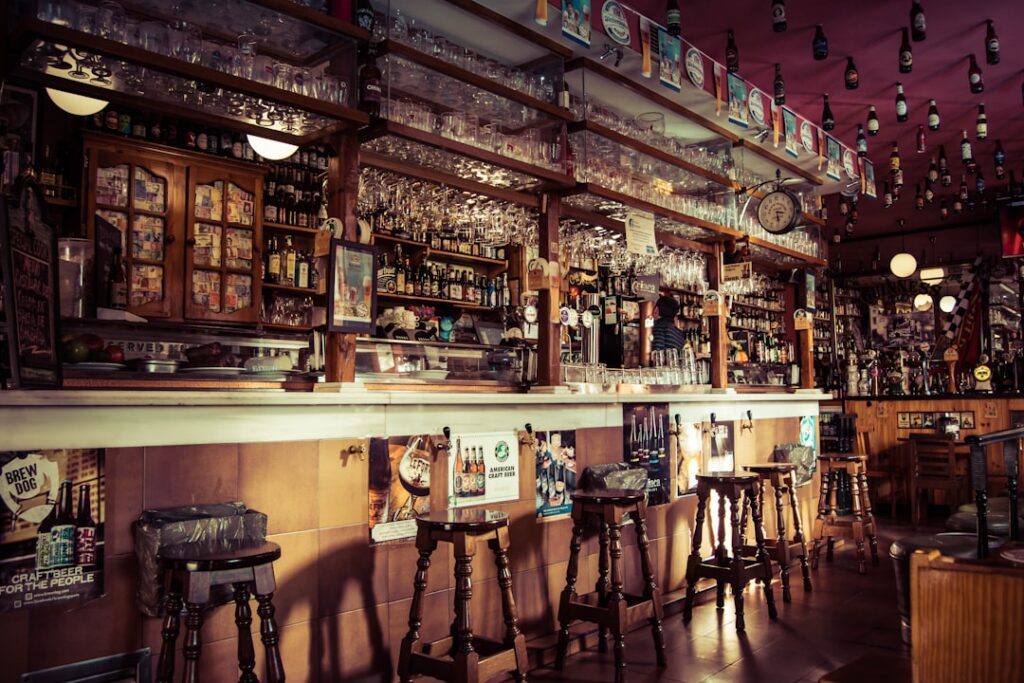
At about ten at night in August, when the heat finally slips off the stone, Plaza del Pilar does a funny thing: children start chasing pigeons again, waiters straighten the last terrace tables, and the basilica domes turn the colour of apricots for a few minutes before the sky goes blue-grey. That is the hour when Zaragoza makes sense. Not at midday, when first-time visitors wonder if they have misjudged the weather, but later, when the old town fills up and El Tubo begins its nightly performance of vermouth, fried things and loud opinions.
If you are planning a Zaragoza city break in summer 2026, this is a good year to do it. There is the added buzz of the 12 August eclipse in Spain, then a strong run of big autumn events if you stay later in the season, from Vive Latino on 4 and 5 September to the Fiestas del Pilar in October. More importantly, Zaragoza remains one of those rare Spanish cities that still feels lived in rather than staged. It has knockout monuments, genuinely good food and, if you choose your base carefully, almost everything worth doing is walkable.
Is Zaragoza actually worth a city break, or is it just the place between Madrid and Barcelona?
Yes, Zaragoza is worth visiting, and not merely as a stop on the AVE line. British travellers often arrive with modest expectations and leave slightly annoyed that nobody told them sooner. Part of the problem is that Zaragoza does not market itself with the swagger of Seville or San Sebastián. Part of the charm is exactly that.
What makes it work for a short break is balance. The old town is compact enough to cross on foot, but substantial enough that you do not feel you have “done” it in half a day. Roman remains sit under bar terraces, a vast baroque basilica faces one of Spain’s great urban squares, and a taifa palace from the 11th century still feels atmospheric rather than dutiful. Then there is the food. This is not a city where you eat one ceremonial lunch and then snack badly for the rest of the weekend. You can graze properly here.
The other point in Zaragoza’s favour is honesty. It is not polished into submission. In summer, shutters come down against the afternoon heat, old men still occupy the coolest benches first, and some of the best tapas bars look as if they have no interest whatsoever in impressing you. That is usually a good sign.
If you only have two nights, Zaragoza is ideal. If you have three, better still. Less than that and you will miss the city’s rhythm, which is half the point.
Why El Tubo still matters, and where to eat when you don’t want touristy tapas
Visitors are often told to go to El Tubo, then warned that El Tubo is too obvious. Both things are true, and both are slightly misleading. El Tubo is touristy in the sense that everyone ends up there; it is also where plenty of locals still begin an evening. The trick is not avoiding it, but knowing where to stop and what to order.
Bodegas Almau is still one of the names worth knowing, not least because it feels rooted in Zaragoza rather than designed for weekenders. The wine list is the first clue. Come here for a vermouth or a glass of garnacha and something small rather than a full meal. A few streets away, Taberna Doña Casta is the place people mention for croquetas, and with reason. It can be crowded, but the turnover is quick and the atmosphere part of the appeal.
The unexpected detail most first-time visitors miss is that El Tubo works better as a sequence than a destination. Do not sit down in the first place you see and order five plates. Move. One drink, one tapa, next stop. Stand at the bar if you can. On Calle Estébanes and the lanes around it, this is still how the quarter makes sense.
For something more substantial, Casa Lac remains one of the old names in town. Founded in 1825, it has the kind of history that would be overexploited elsewhere, yet it still feels grounded in the local table, especially with vegetable dishes and classic Aragonese cooking. If you want the serious, celebratory meal, La Prensa is the Michelin-starred choice and still one of the best ways to see how refined Zaragoza’s food scene can be when it chooses to show off.
A local habit worth copying in summer: eat late, but not too much at once. Zaragoza nights are made for a small plate at 8.30, another at 9.30, and a final drink somewhere cooler and quieter once the families have drifted home.
Why La Seo is often more interesting than the Pilar, even if the Pilar gets all the postcards
The Basílica del Pilar is the image everyone knows, and rightly so. It dominates the square, carries one of Spain’s most important Marian traditions and, according to Catholic tradition, stands on the site where the Virgin appeared to Saint James in AD 40, making it the first Marian temple in Christendom. Even if you are not religious, that is a remarkable claim.
But if you ask me which building rewards close attention more, I often say La Seo. It tends to be overshadowed by the Pilar simply because the basilica is bigger, brighter and impossible to miss. La Seo, by contrast, asks you to look. Its layers tell the real story of Zaragoza: Roman, Islamic, medieval Christian, Mudéjar, Renaissance, baroque. That complexity is what makes the city interesting.
The mudéjar work is the detail many visitors remember afterwards. Aragon’s mudéjar architecture, shaped by Muslim craftsmen working under Christian rule, gives the building a texture and rhythm that feel completely local. This is not a generic cathedral you tick off because guidebooks tell you to. It is a history lesson in brick, tile and accretion.
My advice is simple: do the Pilar first, then cross mentally and physically toward La Seo while the square is still in your eye. You will understand more by comparison. The Pilar impresses through scale and setting; La Seo gets under your skin through intricacy.
An insider note for summer: early evening is the best time to look around the plaza and riverfront, not just for cooler air but for the quality of light on both buildings. Zaragoza’s stone can appear brutally pale at 2pm and wonderfully cinematic by 9pm.
How much can you really do on foot, and when does the tourist bus make sense?
One of the pleasures of staying central is that Zaragoza is genuinely manageable without overplanning. The Basílica del Pilar is in the heart of the city, so if you book accommodation in the old town you can usually reach it in minutes. The Palacio de la Aljafería is around 1.5 km from the centre, which works out at roughly 20 minutes on foot. Even in summer that is perfectly doable if you go in the morning or later in the day.
The Parque de Atracciones, on the other hand, sits about 4 km from the centre. You can walk it in around 50 minutes, but unless you are specifically in the mood for a long summer stroll, transport makes more sense. Bus 34 stops at “Parque de Atracciones Zaragoza”, and the journey is far kinder than trudging there in the afternoon heat.
The Zaragoza Tourist Bus is useful when you want a first-day overview or when older travellers in your group would rather save their legs. It runs a 90-minute circuit with 16 stops including the Pilar, La Seo and the Aljafería. In 2026, it operates daily from 10:30 to 18:00, with departures every 30 to 45 minutes. Tickets cost 10 euros for adults, 5 euros for over-65s, 8 euros for students, and children under five go free.
That price is fair rather than miraculous, and it is worth it chiefly for orientation. I would not build an entire weekend around it, but for a first pass through the city it helps connect the dots. What many people do not realise is that Zaragoza reveals itself through geography. Once you have seen how the monumental riverfront, the compact old town and the slightly more workaday surrounding districts fit together, the city becomes much easier to read.
Is the Aljafería really unmissable, or can you skip it on a short weekend?
Do not skip it. If the Pilar gives Zaragoza its skyline, the Aljafería gives it depth. Built as an Islamic fortress-palace in the 11th century during the taifa period, it later became a Christian royal palace and now houses the Cortes de Aragón. That evolution alone would make it worth seeing; the real surprise is how intimate parts of it still feel.
From outside, some visitors are underwhelmed at first. The setting is less theatrical than one expects after seeing Granada or Seville. Then you get inside and the place begins to work on you: horseshoe arches, courtyards, defensive mass giving way to ornamental delicacy. The historical layering is not an academic footnote here; it is the whole drama of the building.
The best approach is to walk there from the centre, ideally in the morning. The 20-minute route helps you see the city beyond postcard Zaragoza. You pass from the old core into a more ordinary urban fabric, which makes the palace’s survival feel even more striking.
One anecdotal detail I often share with friends: the Aljafería tells you more about Aragon’s place in Spanish history than many grander sites elsewhere. It is not just a beautiful palace; it is a reminder that Zaragoza sat at the crossroads of Islamic, Jewish and Christian worlds, and that its identity was shaped by all three. You feel that here more concretely than in almost any museum label.
What should you know about summer 2026, from the 12 August eclipse mood to autumn festivals worth booking early?
Summer 2026 has an added frisson because of the 12 August eclipse. Even if your plans are not built entirely around eclipse-chasing, the date gives the season a sense of occasion across Spain, and Zaragoza is a very good city in which to experience unusual skies and long communal evenings. The broad riverfront and open expanses around Plaza del Pilar make people look up together; it is one of those places where public space still works as shared theatre.
Beyond August, Zaragoza’s 2026 calendar is unusually strong. Vive Latino lands at Espacio Expo on 4 and 5 September, with names including Amaia, Loquillo and Rigoberta Bandini. If your idea of a city break includes music and a younger, high-energy crowd, those dates are worth noting now.
Then come the Fiestas del Pilar from 10 to 18 October, with the Ofrenda de Flores on 12 October as the emotional and visual centrepiece. It is beautiful, moving and very busy. If you are in town then, book accommodation as early as possible and expect the city to belong as much to locals in regional dress as to visitors with cameras.
Later in the year, the Festival de Jazz de Zaragoza runs from 12 to 22 November at the Sala Multiusos of the Auditorio Princesa Leonor, with artists including Kurt Elling and Paquito D’Rivera. And if you like seeing a city’s cultural life below the headline level, PopyRock 2026 has registrations open until 15 October and its final on 28 November at El Túnel.
The point is not that you must plan around an event. It is that Zaragoza rewards checking the calendar. In a city this size, festivals change the feel of the streets in a way they do not always do in larger places.
Where to stay in Zaragoza old town if you want everything within strolling distance
If you are wondering where to stay in Zaragoza old town, keep it simple: aim for the area between Plaza España, Plaza del Pilar and El Tubo. That puts you within easy walking distance of the main sights, the best evening eating streets and the sort of spontaneous wandering that makes a short break feel richer.
For most visitors, the ideal base is not directly on the noisiest lane in El Tubo but just beside it. You want to be close enough to pop out for a late vermouth or a final tapa, while still having a reasonable chance of sleeping well. Around Puerta Cinegia, you are in exactly that sweet spot.
A genuinely useful option here is ZaragozaHome, which has two apartments at Puerta Cinegia, right between El Tubo and Plaza España. The practical advantages are obvious: private parking included, a 9.8 rating on Booking.com, and rates from 85 euros a night. For a summer weekend, especially if you are arriving by car or want apartment space rather than a standard hotel room, that is unusually convenient.
The wider old-town logic is this. Stay central and you can walk to the Pilar in minutes, reach the Aljafería in around 20 minutes, and spend your evenings drifting through the liveliest part of the city without needing taxis. In summer, that matters. Zaragoza is best enjoyed when you can retreat for a shower in the late afternoon and head back out once the streets wake up again.
Is the Parque de Atracciones worth adding, or is it only for families?
The Parque de Atracciones de Zaragoza is not essential for every traveller, but it is a decent option if you are travelling with children, teenagers or a group that wants a lighter afternoon outside the old-town monument circuit. It sits at P.º del Duque de Alba, 15, and in 2026 opens Wednesday to Friday from 16:00 to 21:00, and Saturdays and Sundays from 11:00 to 21:00.
The pricing is straightforward enough. Entry plus two Flexiplan tickets costs 8 euros. The Super Diversión wristband for visitors over 110 cm is 16.50 euros on weekdays and 20 euros on Saturdays and public holidays. The Infantil wristband for those under 110 cm is 14 euros both on weekdays and Saturdays or holidays.
That is not bad value if you plan to spend several hours there, though I would not recommend it as a substitute for Zaragoza itself. Think of it instead as an optional add-on, especially useful if you are in town during a hot spell and want an easy family plan that does not involve dragging reluctant children through another church.
The insider point here is one of timing. Go later rather than earlier. The park is more comfortable as the sun drops, and Zaragoza families often treat it as an evening outing rather than a full-day expedition.
FAQ
Is Zaragoza worth visiting for a weekend?
Yes. Zaragoza is one of Spain’s best weekend cities if you like history, proper tapas culture and a walkable old centre. Two nights is enough to see the highlights, but three lets you enjoy the city at a better pace.
Where should I stay in Zaragoza old town?
Stay near Plaza España, Puerta Cinegia or the edges of El Tubo. That area gives you quick access to the Pilar, easy evening eating and a manageable walk to most major sights.
Can you do Zaragoza without a car?
Absolutely. The centre is very walkable, the Aljafería is around 20 minutes on foot from the old town, and the tourist bus can help on a first day. You only really need public transport for places further out, such as the Parque de Atracciones.
Stay in the old town without overthinking it
If you want a base between El Tubo and Plaza España, with private parking and enough space to enjoy Zaragoza properly, these Puerta Cinegia apartments are one of the smartest options in the centre.
Looking for accommodation in central Zaragoza? Our ZaragozaHome apartments are steps from the Pilar, La Seo and El Tubo. Private parking included and rated 9.8 on Booking.com.