2 Days in Zaragoza Itinerary: Spring Tapas Break and Where to Stay Near El Tubo
A local, practical 2 days in Zaragoza itinerary for a spring weekend, with exact prices, opening hours, tapas stops, honest advice on whether Zaragoza is worth visiting, and where to stay in Zaragoza old town near El Tubo.
At about seven in the evening, just when the stone of Plaza del Pilar starts giving back the day’s warmth, the basilica bells roll across the square and the light turns the Ebro the colour of pewter. That is usually the moment first-time visitors realise they have badly underestimated Zaragoza. They come expecting a convenient stop between Madrid and Barcelona and end up lingering over vermouth in El Tubo, wondering why nobody told them the city had a palace fit for an emir, a cathedral wall of intricate mudéjar brickwork, and one of Spain’s great bar-hopping districts packed into a handful of narrow lanes.
If you are planning a spring weekend, this 2 days in Zaragoza itinerary is built for exactly that sort of traveller: curious, hungry, and not interested in wasting time on filler. It gives you the essentials, but also the texture of the place: when to slip into La Seo, which bridge gives the best evening view, where to book lunch, and where to stay in Zaragoza old town if you want to walk everywhere.
Is Zaragoza actually worth a weekend, or is it just a stop on the train line?
Yes, it is worth a weekend, and the honest reason is that Zaragoza does not feel over-arranged for visitors. It is a real Spanish city first and a destination second, which means your two days are spent among locals doing local things rather than moving through a historic set piece. That matters, especially for British travellers who have done the obvious city breaks and want somewhere with substance.
The draw is not one single blockbuster sight, although the Basílica del Pilar comes close. It is the combination: Roman, Islamic, mudéjar, baroque and modern Zaragoza all fit into a remarkably walkable centre. From Plaza del Pilar you can reach La Seo in about five minutes, the Museo Goya in ten, the Aljafería in roughly twenty, and the heart of El Tubo in barely a stroll. In spring, when terraces are busy but not frantic and the air is warm rather than punishing, the city is at its most persuasive.
Zaragoza also rewards people who like places with edges. It is grand without being polished to death. You can admire one of Spain’s most important Islamic palaces in the morning and eat a plate of excellent tapas standing up in the evening. If you only have two days, that compactness is exactly why Zaragoza works so well.
How should you spend your first morning around Plaza del Pilar?
Start early, and start with the Basílica del Pilar before the square fills up. The basilica opens daily from 6:45 to 20:30, and entry is free. Even if you are not especially church-minded, it is worth going in during the quieter morning hours because the scale of the interior lands differently when there are only a handful of people shuffling about under the domes.
The detail most visitors remember is the Santa Capilla, which houses the small column, or pilar, associated with the tradition that the Virgin appeared here to Saint James in AD 40. That legend gives the building its emotional centre. The exterior gets the photographs, of course, but the interior is what makes the place feel less like a monument and more like a living shrine.
When you come back outside, do not rush off immediately. Walk the length of Plaza del Pilar and look back. This is one of Europe’s great civic spaces, and because Zaragoza never became a city-break cliché, you can often enjoy it without the sense of performing a tourist ritual. In spring the square is full of skaters, families and the odd wedding party emerging into the sun.
From there, cross over to La Seo, the cathedral that many people glance at and far too few properly visit. It is barely five minutes away on foot, but it tells a completely different story of the city.
Why is La Seo more interesting than the Pilar, and why does nobody talk about it?
If the Pilar is Zaragoza’s heart, La Seo is its brain. It asks a little more of you, but gives more back. Built on the site of the city’s former main mosque, it layers Christian and Islamic histories in a way that feels unusually visible rather than simply noted in a guidebook footnote. The mudéjar exterior alone is one of the most beautiful pieces of brickwork in Spain, and that UNESCO recognition is deserved rather than ceremonial.
La Seo is open Tuesday to Sunday from 10:00 to 14:00 and from 16:00 to 18:30. Admission is refreshingly reasonable: €4 for adults, €3 for students and pensioners, and free for children under 10. For a cathedral of this quality, it is one of the better-value tickets you will buy in Spain.
The thing I always tell friends to look for is not a single masterpiece but the building’s changes in texture. You can feel the city’s shifts in power and taste inside its walls. The old mosque site matters; the Gothic structure matters; the mudéjar additions matter. It is a history of Zaragoza in stone, brick and decoration. If you are choosing between giving La Seo twenty quick minutes or a proper hour, choose the hour.
Afterwards, loop back through the old centre for lunch at Casa Lac, on Calle Mártires 12. It has been open since 1825 and is often described as one of Spain’s oldest restaurants. That is not just a nice anecdote; it explains the sense of continuity in the room. This is a good place for a traditional Aragonese lunch when you want something more substantial than tapas and a bit of calm before the afternoon.
What should you do on your first afternoon if you like art, but not museum fatigue?
The smartest move is the Museo Goya – Colección Ibercaja, because it is compact enough for an afternoon and specific enough not to feel dutiful. From Plaza del Pilar it is about a ten-minute walk, so there is no logistical drama involved. Opening hours are Tuesday to Saturday from 10:00 to 14:00 and 16:00 to 20:00, and Sundays and public holidays from 10:00 to 14:00. Tickets cost €6 for adults, €3 for students and pensioners, and are free for children under 12.
What makes the museum worthwhile is not just that it is dedicated to Goya, though that would already be reason enough in his home region. It also holds complete series of his engravings, which is where many visitors finally understand just how modern he could feel: savage, witty, politically sharp, and not remotely the pious old-master stereotype some arrive with.
Do not overpack the afternoon. One of the pleasures of Zaragoza is that it invites pauses. After the museum, head back towards the river and walk onto the Puente de Piedra. It is one of the city’s oldest bridges, dating from the fifteenth century, and the view from here towards the domes and towers of the Pilar is the classic Zaragoza panorama for a reason. Go in the late afternoon if you can. The light is kinder then, and the river often carries a breeze that makes spring walks feel nearly theatrical.
From the bridge, you understand the geography of the city in one glance: the basilica anchored by the water, the old quarter tucked behind it, and the broad sky that gives Zaragoza some of its unexpected drama. It is also a useful mental reset before the evening’s more serious business, which is eating.
Where should you go in El Tubo for tapas without wandering aimlessly?
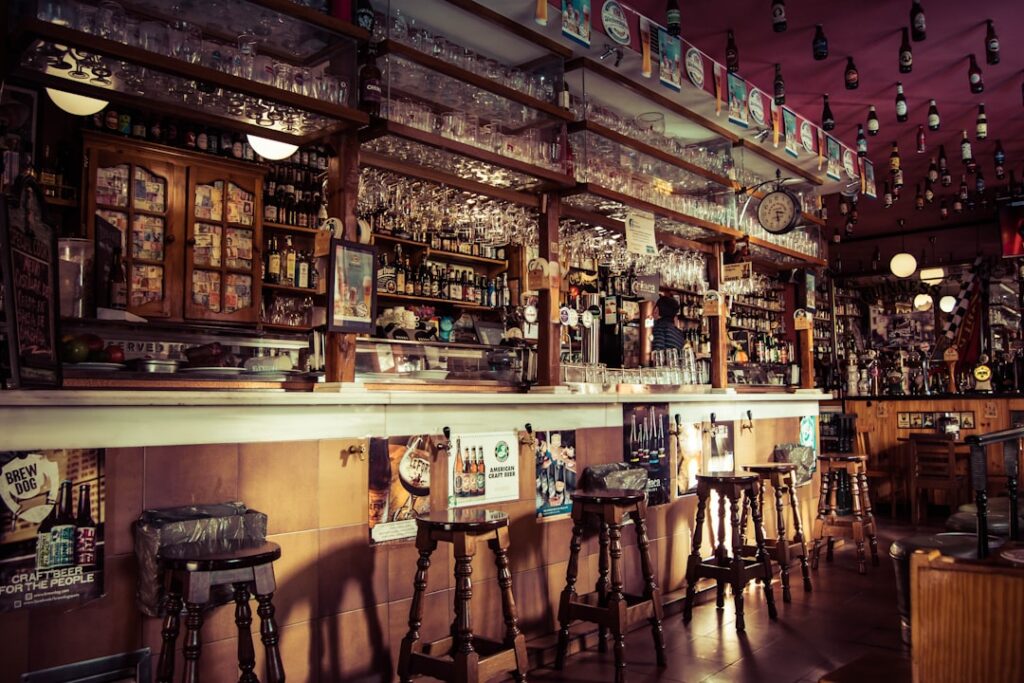
El Tubo is not large, but that is part of the trap. Because it looks manageable, people drift in and then make indifferent choices out of hunger. Better to arrive with at least one anchor. Mine is Bodegas Almau on Calle Estébanes 10, a veteran stop known for tapas and vermouth and exactly the sort of place that makes a spring weekend in Zaragoza feel justified. It has character without trying too hard, and this is the area to lean into the local rhythm: one drink, one tapa, move on, repeat.
The joy of El Tubo is the compression. In a few small streets in the old town, you get the sociable, slightly chaotic pleasure of Spanish tapeo at full tilt. People spill into the lanes, orders are shouted, and tiny bars turn out things they have made thousands of times. You do not come here for hushed refinement; you come for atmosphere, movement and the right kind of noise.
Spring is ideal because evenings are lively but usually not uncomfortably packed. Start relatively early by Spanish standards if you want an easier pace, especially on Fridays and Saturdays. If you have had a proper lunch at Casa Lac, keep dinner elastic: a couple of tapas here, another stop elsewhere, perhaps a final drink near Plaza España. That is the rhythm that suits Zaragoza best.
And if you are wondering where to stay in Zaragoza old town so you can walk home after all this, the answer is simple: stay as close to El Tubo and Plaza España as your budget allows. The whole point is to have the city at your feet.
What makes the Aljafería the one sight you should not skip on day two?
If day one explains Zaragoza as a historic city, day two explains its depth, and the Palacio de la Aljafería is the centrepiece. From Plaza del Pilar it is about a twenty-minute walk, an easy route if you set off after breakfast. The palace opens daily from 10:00 to 14:00 and 16:30 to 20:00. Tickets are €5 for adults, €1 for students and pensioners, and free for children under 12.
This is not simply another handsome building. The Aljafería is an eleventh-century Islamic palace and one of the most important surviving examples of Hispano-Islamic architecture in Spain. That alone would justify the visit, but what gives it an added edge is that it now houses the Cortes de Aragón, the regional parliament. The building is not frozen in one era; it has kept accumulating meanings.
The first-time surprise is often how delicate parts of it feel after the muscular exterior. You move from fortification to ornament, from defensive presence to refined geometry. It is easy to talk about Christian, Muslim and later royal Zaragoza in broad terms; the Aljafería lets you see those layers physically.
Give it a proper morning. Do not try to squeeze it into an hour on the way to somewhere else. When you step back outside, you will also have shifted slightly away from the postcard Zaragoza of domes and squares, which is useful. The city is broader than its riverfront image.
For lunch, book La Prensa on Calle José Nebra 3 if you want to make day two feel celebratory. It is the polished counterpoint to the informality of El Tubo: a Michelin-starred address for travellers who enjoy food enough to build part of a trip around it.
Can contemporary Zaragoza compete with all that history?
It can, provided you do not expect a forced version of modernity. Zaragoza’s contemporary side is quieter and more local, which is exactly why it is worth seeing. After lunch, head to the Centro de Arte y Tecnología Etopia, around twenty-five minutes on foot from Plaza del Pilar. It opens Tuesday to Saturday from 10:00 to 14:00 and 17:00 to 21:00, and Sundays from 10:00 to 14:00. Entry is free.
Etopia works at the intersection of art, science and technology, and that mix gives your itinerary a useful change of register after churches and palaces. Depending on what is on, you may find exhibitions, installations or projects that are more exploratory than blockbuster. I like that about it. It feels made for residents as much as visitors, which keeps it grounded.
If the weather is good, continue afterwards to Parque Grande José Antonio Labordeta, roughly thirty minutes on foot from Plaza del Pilar if you were coming directly from the centre, and a fine late-afternoon destination in spring. Opened in 1929, it remains Zaragoza’s grand urban park, full of broad avenues, monuments and gardens. This is where the city exhales. Families promenade, runners do their circuits, and everyone seems to rediscover their appetite before dinner.
There is a practical point here too: a two-day trip can become heavy if every hour is indoors and historical. A walk through the park restores some balance. Then return towards the centre for dinner at La Ontina, on Calle Coso 35, and enjoy the fact that Zaragoza can do both monumental history and an easy evening meal without fuss.
What are the useful opening hours, prices and walking distances to know before you go?
For a short break, real facts matter more than grand claims, so here are the ones worth keeping in your pocket. The Basílica del Pilar is open every day from 6:45 to 20:30 and is free to enter. La Seo opens Tuesday to Sunday from 10:00 to 14:00 and 16:00 to 18:30; tickets are €4 for adults and €3 for students and pensioners. The Museo Goya opens Tuesday to Saturday from 10:00 to 14:00 and 16:00 to 20:00, and Sundays and holidays from 10:00 to 14:00; tickets are €6 for adults and €3 for students and pensioners.
The Aljafería opens daily from 10:00 to 14:00 and 16:30 to 20:00, with admission at €5 for adults and €1 for students and pensioners. Etopia is free and opens Tuesday to Saturday from 10:00 to 14:00 and 17:00 to 21:00, plus Sundays from 10:00 to 14:00.
As for distances from the centre, the city is kinder on foot than many people expect. La Seo is about five minutes from the Pilar. The Museo Goya is around ten minutes. The Puente de Piedra is another five. The Aljafería takes about twenty minutes from Plaza del Pilar, Etopia about twenty-five, and Parque Grande around thirty. If you are staying near El Tubo or Plaza España, almost everything in this itinerary feels comfortably walkable.
That is one of the strongest arguments for this 2 days in Zaragoza itinerary: you are not spending your break in transit. You are moving through a city that still reveals itself best at street level.
Where to stay in Zaragoza old town if you want tapas, sights and easy walking?
The best base is the stretch between El Tubo, Plaza España and Plaza del Pilar. Stay here and you can do breakfast, churches, museums, vermouth and late-night tapas all on foot. For a short spring break, that convenience changes the whole feel of the trip. You can pop back to your room between lunch and the afternoon, or stroll home after dinner without thinking about taxis.
If you are looking for where to stay in Zaragoza old town with a practical edge, one genuinely useful option is ZaragozaHome at Puerta Cinegia, right between El Tubo and Plaza España. It has two apartments, private parking included, a 9.8 rating on Booking.com, and rates from €85 a night. For couples or friends doing a weekend of eating and walking, that location is hard to beat because it puts the old town exactly where you want it: outside your door, not across the city.
Stay in the middle of Zaragoza’s best walking neighbourhood
If you want to follow this itinerary without relying on taxis or buses, these Puerta Cinegia apartments place you between El Tubo and Plaza España, with private parking included and easy walks to the Pilar, La Seo and the city’s best tapas streets.
Looking for accommodation in central Zaragoza? Our ZaragozaHome apartments are steps from the Pilar, La Seo and El Tubo. Private parking included and rated 9.8 on Booking.com.