2 Days in Zaragoza Itinerary for Summer 2026: History, Hidden Curiosities and Where to Stay in the Old Town
A warm, practical 2 days in Zaragoza itinerary for summer 2026, built around real walking times, exact ticket prices, old-town food stops and honest advice on whether Zaragoza is worth your weekend.
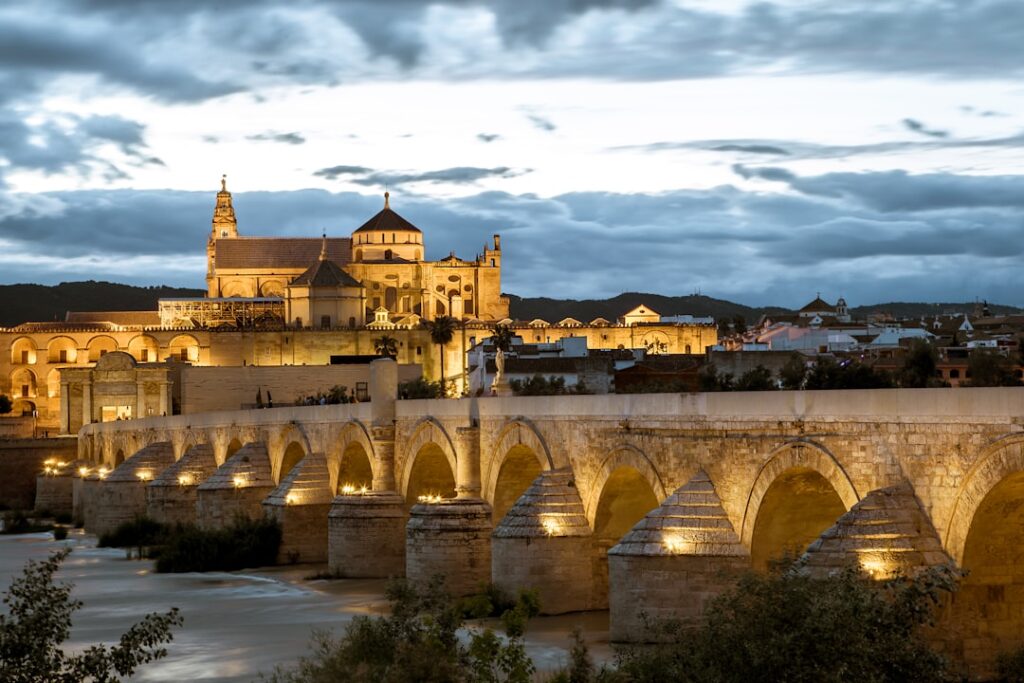
The first thing I tell friends arriving in Zaragoza is not to look up at the Pilar straight away. Stand instead by the stone balustrade near the river at about eight in the evening, when the heat begins to loosen its grip and the Ebro throws back a pale gold reflection of the basilica’s domes. You will hear skateboard wheels from the square, swifts cutting across the sky, and church bells that seem to bounce off the water. It is a very particular kind of Spanish city moment: grand, yes, but also lived in.
Wondering whether Zaragoza is worth visiting? The answer is yes, especially for a short summer break. It lacks the instant glamour of Seville or San Sebastián, which is precisely why it still feels like a place rather than a performance. This 2 days in Zaragoza itinerary is for travellers who want Roman ruins under their feet, Mudejar brickwork over their heads, proper tapas at night and a sensible base in the old town.
Why start at the Pilar when the square is still half asleep?
For day one, begin with the Basílica del Pilar early in the morning, before the square fills with day-trippers and before the paving starts radiating heat. The basilica opens Monday to Saturday from 10:00 to 14:00 and 16:00 to 18:30; on Sundays and public holidays, from 10:00 to 12:00 and 16:00 to 18:30. Entry is free, which matters if you are trying to keep a weekend budget under control.
The obvious reason to come is its scale: the multiple domes, the huge interior, the way it anchors the entire riverfront. The less obvious reason is the Santa Capilla, which contains the small column, or pilar, that according to tradition was given by the Virgin Mary to Saint James. Even if you are not religious, it helps explain why this church feels less like a monument and more like a place of ongoing devotion.
A local tip: walk around the exterior first. Visitors often rush inside and miss the relationship between the basilica, the river and the square. From the north side you get one of the best open views in the city, and in summer the light is softer there than in the broad expanse of Plaza del Pilar. If you like details, notice how the building never quite reveals itself in one go; it is too broad, too layered, too bound up with the skyline.
And this is where the city starts to make its case. Zaragoza does not do tidy postcard perfection. It gives you something more interesting: history accumulated in layers, still in use, still slightly unruly.
Why La Seo is more interesting than the Pilar and hardly anyone says so
From the Pilar, it is roughly 200 metres to La Seo, about a three-minute walk across the old centre, and yet the mood changes quickly. If the Pilar is Zaragoza at its most monumental, the Catedral del Salvador, known as La Seo, is Zaragoza at its most intricate. It opens on the same timetable as the Pilar: Monday to Saturday 10:00 to 14:00 and 16:00 to 18:30, Sundays and holidays 10:00 to 12:00 and 16:00 to 18:30.
Entry costs 4 euros for adults, 3 euros for students and pensioners, and is free for children under 10. Those are modest prices for one of the most revealing buildings in the city. The reason I often prefer it to the Pilar is that La Seo tells a messier, more truthful story about Aragón. Its exterior Mudejar wall and apse are the detail to linger over: Christian cathedral, Islamic artistic inheritance, brick patterns that look almost woven rather than built.
Most people remember the domes of the Pilar and forget La Seo’s skin. That is their mistake. Stand outside long enough and you begin to see what makes Zaragoza different from the standard Spain itinerary. This is not just a city of churches; it is a city where styles overlapped because cultures did. The Mudejar work here is a visible reminder that medieval Aragón was not culturally neat.
Inside, give yourself time. British visitors often underestimate how much these cathedrals repay slow looking. The point is not to tick off another religious building but to notice how La Seo compresses centuries into a single structure. It is one of the best answers to the question, is Zaragoza worth visiting? Yes, because places like this exist slightly below the international radar.
Can you really walk Zaragoza’s big sights in a single morning?
Yes, comfortably, and that is one of the city’s great strengths. This 2 days in Zaragoza itinerary works because the historical core is compact enough to explore on foot without turning the day into a march.
After La Seo, walk about 300 metres, roughly four minutes, to the Museo del Foro de Caesaraugusta. The museum’s opening hours are best checked at the tourist office on the day, but the standard entry price is 4 euros for adults and 3 euros for students and pensioners. What you are seeing here are the remains of the Roman forum of ancient Caesaraugusta, including fragments associated with the basilica and market area. That matters because Zaragoza was not some minor provincial stop; it was a Roman city with civic ambition, and the remains still sit under the modern one.
The pleasure of this museum is partly physical. You descend below present-day street level and suddenly understand just how many versions of Zaragoza are stacked beneath your feet. It is one of those places that changes the way you walk afterwards. Squares become palimpsests; paving stones become lids over older lives.
From the forum museum, continue around 500 metres, about six minutes on foot, to the Puente de Piedra. Built in the 15th century, it is one of the oldest bridges across the Ebro and still provides the city’s classic outward-facing view back towards the old town. Go not because it is on a list but because it helps you read the city properly. From the bridge, the Pilar sits where it should: dominant but not isolated, part of a river landscape that has shaped Zaragoza for centuries.
If you want one useful morning summary, here it is in plain numbers: Pilar to La Seo, 200 metres; La Seo to the Roman forum museum, 300 metres; forum museum to Puente de Piedra, 500 metres. You can cover that chain without stress, with time left for coffee, photos and a few pauses in the shade. For a city break, that ease is gold.
Where should you eat in El Tubo without falling into the obvious tourist trap?
By the time you walk back from the bridge towards El Tubo, about 600 metres or eight minutes, you will probably be hungry and possibly a little suspicious. Fair enough. Streets famous for tapas often disappoint. El Tubo can be busy, noisy and occasionally overpriced, but it is still worth doing if you choose your stops well.
Two places I would point friends to are Casa Lac and Bodegas Almau. Casa Lac, founded in 1825, is widely known as the oldest restaurant in Spain. That fact alone would make it interesting, but it is not just a historical curio. It has long been associated with vegetable-focused cooking, which makes sense in Aragón but still surprises visitors expecting only meat-heavy classics. In summer, it is a very good place to remember that this region’s produce can be the point of the meal.
Bodegas Almau, on Calle Estébanes, is another old-town essential if you want atmosphere without too much fuss. It is known for its broad wine selection and traditional tapas, and it still feels like somewhere locals actually use rather than merely tolerate. This is the sort of bar where ordering a glass can lead, quite naturally, to a second stop and a longer evening.
The trick in El Tubo is timing. Go later for atmosphere, earlier for a little breathing room. If you arrive just before the main evening rush, you have a better chance of finding a corner, reading the room and avoiding that unpleasant feeling of eating on a conveyor belt. Also, do not try to conquer the whole area. Pick two or three bars, stay present and let the night stretch a bit.
This part of the city answers a different question from the monuments. Not what happened here, but how does Zaragoza actually enjoy itself? The answer is sociably, with noise spilling into narrow streets and with an easy confidence that does not feel staged for outsiders.
Is the Aljafería worth the walk, or should you save your energy for tapas?
Save your energy for both. On day two, head to the Palacio de la Aljafería, around 1.5 kilometres from the centre, which is usually about a 20-minute walk depending on where you start in the old town. The approach is not the prettiest in the city, which may be why some visitors delay or skip it. They should not. The Aljafería is one of Zaragoza’s major historical sights and one of the best surviving examples of Islamic architecture in Spain outside Andalucía.
This fortified palace dates from the 11th century. That alone should shift expectations. Many first-time visitors to Spain mentally place Islamic palace architecture far to the south, but Zaragoza was part of that story too. The building later acquired Christian additions, which means, again, that you are looking at a site defined by historical layering rather than a single tidy style.
General admission is 5 euros, reduced admission 1 euro, and entry is free on Sunday afternoons. If you happen to be in the city then, it is one of the best-value cultural visits in Spain. Opening hours should be checked locally before you go, as they can vary.
The insider tip is simple: do not race through the courtyard spaces. The magic of the Aljafería is often in the transition from defensive exterior to delicate interior. From outside, it reads as a fortress. Inside, arches and decoration soften the mood entirely. It feels private, refined and unexpectedly intimate after the scale of the old-town churches.
If day one in Zaragoza is about urban texture, day two starts by proving the city has a genuinely heavyweight monument that can stand beside far better-known Spanish landmarks. The Aljafería is not a side note. It is a reason to come.
What do you do in Zaragoza after the churches and palaces are done?
You have options, and in summer that matters. If you are travelling with children, want a break from stone and history, or simply fancy something unexpected, the Acuario de Zaragoza is a smart second stop after the Aljafería. It is around 2 kilometres away, about 25 minutes on foot.
The aquarium is the largest river aquarium in Europe, focusing on species from five of the world’s major rivers. That is the sort of fact that sounds like marketing until you see the scale of the place. Its opening hours are specific: Tuesday, Wednesday and Thursday from 11:00 to 19:00; Friday, weekends and public holidays from 10:00 to 20:00; closed on non-holiday Mondays.
Ticket prices are 18 euros for adults, 12 euros for children aged 5 to 12, 6 euros for children aged 3 and 4, and free for children under 3. There are also discounts for large families, disabled visitors, university students, youth card holders and unemployed visitors. For practical planning, that makes this the priciest stop in this itinerary, so it is worth deciding in advance whether it suits your interests.
If not, use the afternoon differently. Zaragoza rewards slower pleasures: a long lunch, a return to the river, a shaded drink before dusk. The Parque Grande José Antonio Labordeta, the city’s main green lung, is another excellent way to decompress from sightseeing if you have the energy to continue. In high summer especially, having at least one open-air break from old stone and museums makes the trip more enjoyable.
This is also where I would answer the value question honestly. Not every hour in Zaragoza needs to be filled with headline attractions. Part of the city’s appeal is that it lets you alternate between major monuments and ordinary urban life without friction.
Where to stay in Zaragoza old town if you want to walk everywhere
If your priority is staying central enough to do almost everything on foot, the old town is the right choice. For a short break, being able to walk from your accommodation to the Pilar, La Seo, El Tubo and the river in minutes is worth far more than shaving a few euros off the nightly rate in a less convenient district.
The area around Plaza España and Puerta Cinegia is particularly useful because it sits between the monumental centre and the evening life of El Tubo. You can sightsee in the morning, rest in the late afternoon and step back out for dinner without needing taxis or complicated planning. That convenience becomes especially valuable in summer, when returning to your room for an hour of air-conditioning can rescue the day.
For readers asking specifically where to stay in Zaragoza old town, one genuinely practical option is ZaragozaHome. They have two apartments at Puerta Cinegia, between El Tubo and Plaza España, with private parking included, a 9.8 rating on Booking.com and prices from 85 euros per night. If you are driving, the parking is a bigger advantage than it may sound, because central access can otherwise be a headache. If you are not driving, the location still makes excellent sense for a weekend itinerary built around walking.
The broader point is this: choose somewhere that allows spontaneity. Zaragoza is a city best enjoyed by drifting a little between fixed sights, bars, churches and squares. A base in the old town gives you that freedom.
So, is Zaragoza worth two full days?
Yes, and two days is probably the sweet spot for a first visit. One day would let you see the headline monuments, but not really feel the place. Three or four days can be lovely if you are moving slowly, but for many travellers a weekend is enough to understand why Zaragoza deserves more affection than it gets.
What makes it worth your time is not one knockout attraction alone, though the Pilar and Aljafería come close. It is the combination: Roman remains under the city, Mudejar details on La Seo, medieval stone on the bridge, proper tapas in El Tubo, long summer evenings by the Ebro and a historical weight that never feels embalmed.
If you follow this 2 days in Zaragoza itinerary, you will get a version of the city that is both practical and true to how locals use it. Walk the major sights in the cool of the morning, eat well after dark, keep one or two hours unscheduled, and do not be put off by its lack of international hype. Zaragoza does not beg for attention. It simply rewards it.
Stay right where Zaragoza makes sense
If you want to be between El Tubo and Plaza España, with private parking and an old-town base that lets you walk almost everywhere in this itinerary, take a look at ZaragozaHome’s Puerta Cinegia apartments from €85 per night.
Looking for accommodation in central Zaragoza? Our ZaragozaHome apartments are steps from the Pilar, La Seo and El Tubo. Private parking included and rated 9.8 on Booking.com.