Day Trip Zaragoza from Barcelona: Spring History, Hidden Curiosities and Where to Stay in the Old Town
A smart, honest guide to a day trip Zaragoza from Barcelona, with spring atmosphere, real opening times and prices, overlooked history, practical walking distances, food tips and where to stay in Zaragoza old town.
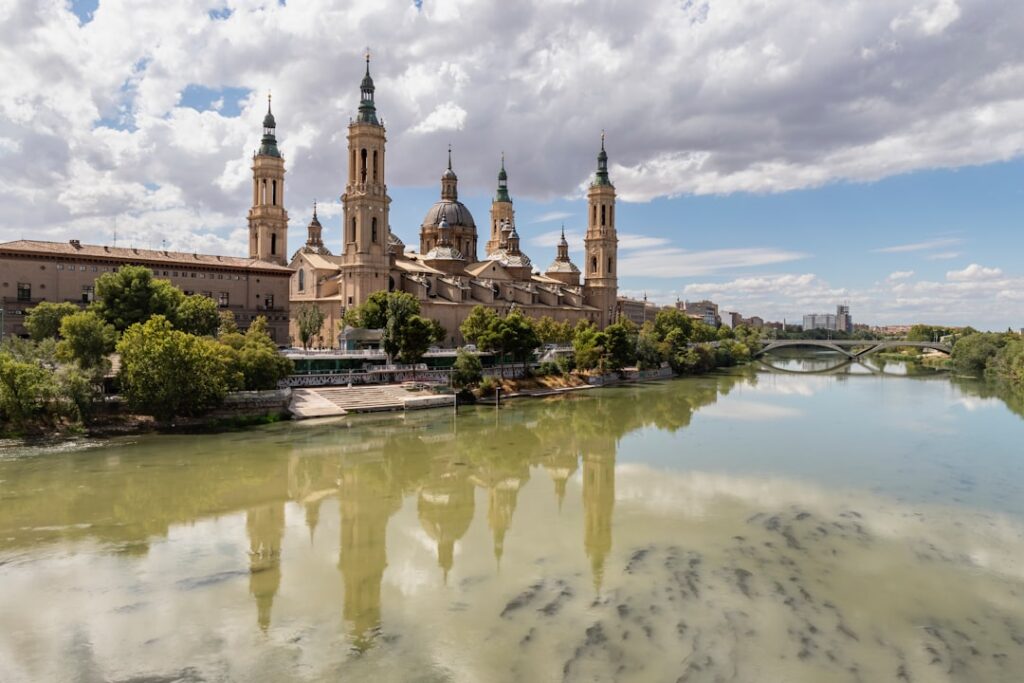
At about midday in Plaza del Pilar, just when the bells start competing with the street musicians, the smell of warm churros drifts across the square and the great baroque bulk of the basilica seems to turn almost honey-coloured. That is the Zaragoza most day-trippers remember. What many miss is that if you slip a few minutes away, into the quieter lanes behind La Seo or down towards the old merchant streets, the city becomes something far subtler: Roman walls, Mudéjar towers, Renaissance courtyards and tapas bars where nobody is in a hurry.
If you are weighing up a day trip Zaragoza from Barcelona, the short answer is yes, it is worth it — especially in spring, when the light is kind, the distances are manageable and the old town feels lively without the exhausting heat of summer. The longer answer is that Zaragoza works best if you stop treating it as a box-ticking detour and start seeing it as one of Spain’s most layered historic cities.
Is Zaragoza actually worth a day trip from Barcelona, or is it just a convenient stop?
It is worth going for its own sake. That is the honest answer, and one I give friends all the time. British travellers often know Zaragoza only as the place the train passes through on the way to Madrid. That does it a real disservice. What makes the city special is not one headline monument but the way several major periods of Spanish history sit almost on top of each other: Roman Caesaraugusta, Islamic Zaragoza, medieval Aragón, baroque Catholic grandeur and 19th-century urban life.
For a single day, it is unusually efficient. You can stand in Plaza del Pilar, walk around the two cathedrals, cross into the old tapas quarter of El Tubo, and still have time for the Aljafería or a museum without spending your whole day on buses or taxis. The core sights are compact. From the Basílica del Pilar to La Seo is roughly 5 minutes on foot, about 400 metres. From the Pilar to the Aljafería it is around 20 minutes, about 1.5 km. Those are exactly the sort of distances that make a city satisfying for a day rather than frustrating.
Spring is particularly good because Zaragoza’s broad avenues and stone squares can feel severe in high summer, while in March, April and May they soften. Terraces fill up, orange blossom appears in sheltered corners, and the Ebro breeze is refreshing rather than punishing. If you only have one day, you will see enough to understand the city. If you stay overnight, you will see why locals are quietly pleased that not everyone has caught on yet.
Why is La Seo often more interesting than the Pilar, even though everyone photographs the basilica first?
The Basílica del Pilar is the star, of course. It dominates the square, it carries one of Spain’s great Marian traditions, and according to that tradition it stands on the site where the Virgin Mary appeared to the apostle Santiago in AD 40 — often described as the first Marian shrine in Christendom. Even people who are not especially religious tend to be impressed by its scale.
But if you are interested in history rather than just spectacle, La Seo is often the more rewarding building. The reason is simple: it tells a more complicated story. This cathedral includes one of the finest Mudéjar exteriors in Spain, the kind of brick, tile and geometric decoration that reveals the artistic exchange between Islamic and Christian traditions in medieval Aragón. It feels less straightforwardly triumphant than the Pilar and therefore, to my mind, more human.
A practical way to understand both is the guided visit called Dos Catedrales. It lasts about two hours and starts from the Tourist Office at Calle Santiago, 22, in Plaza del Pilar. The general price is 5.60 euros; reduced tickets for large families, Carné Joven holders, students and people with disabilities cost 4.50 euros; over-65s and unemployed visitors pay 2.80 euros; children aged 5 to 7 go free. One detail that catches people out: entry to La Seo is not included, and costs an additional 7 euros per person.
If you prefer to wander alone, do at least look closely at La Seo’s exterior instead of hurrying past. Most first-time visitors barely register it because the Pilar absorbs all the attention. That is a mistake. The square gives you grandeur; La Seo gives you texture.
What can you realistically see on foot in one spring day without turning Zaragoza into a checklist?
The old centre is kinder to walkers than it first appears. Start in Plaza del Pilar early enough that the square still feels spacious. Visit the basilica, take in the riverfront, and then head to La Seo while the light is still good on the cathedral walls. The short walk between them is one of the small pleasures of Zaragoza: in less than five minutes, you move from open monumental space into something denser and older.
From there, drift south into the lanes around El Tubo for a late-morning coffee or an early vermouth. Then decide whether you want a palace, a museum or a longer walk by the river. If your choice is the Aljafería, the walk from the Pilar takes around 20 minutes. It is far enough to feel like you are seeing another part of town, but not so far that it eats the day.
If you would rather conserve energy or get a quick overview, the Autobús Turístico de Zaragoza is more useful than many visitors expect. The route lasts 90 minutes and has 16 stops, including the Basílica del Pilar, La Seo and the Palacio de la Aljafería. It runs daily from 10:30 to 18:00, with departures every 30 to 45 minutes depending on the season. Adult tickets cost 10 euros, over-65s pay 5 euros, students 8 euros, and children under 5 travel free. The ticket is valid for 24 hours and you can hop on and off at any stop. If you are arriving with limited time and want bearings quickly, it is a sensible investment rather than a tourist trap.
One more useful measure: the walk from the Pilar to the Acuario de Zaragoza is about 35 minutes, roughly 2.8 km. That is perfectly manageable in spring if you enjoy riverside walking, but probably not where I would send a first-time visitor unless you are travelling with children or have a particular interest in aquariums.
What is the one historic building most day-trippers miss, and why should you make time for it?
The Real Maestranza de Caballería de Zaragoza is exactly the sort of place that rewards curiosity. It occupies the old Palace of Don Miguel Donlope, a notable 16th-century Aragonese palace house, and it offers something the bigger monuments cannot: a sense of urban aristocratic Zaragoza, rather than purely ecclesiastical or royal power.
There is an intimacy to it. You notice courtyards, proportions, staircases, domestic grandeur. It feels lived-in by history rather than staged for it. Prices are modest too: general admission is 2.55 euros; over-65s and unemployed visitors pay 1.30 euros; large families, Carné Joven holders, students and people with disabilities pay 2.05 euros; children aged 5 to 7 enter free. You do need supporting documentation for reduced rates.
The thing to know is that it is not open in the simple, predictable way of a state museum. The 2026 visit calendar should be checked on the official website, and the palace is closed in August and during private events. That irregularity is probably one reason so many people miss it. If it is open while you are in town, go. It gives you a richer picture of the city than another rushed coffee stop ever will.
As an unexpected historical footnote, remember that Zaragoza was once a city of major noble households whose influence extended well beyond Aragón. Places like the Real Maestranza preserve the architecture of that world far better than casual visitors realise.
Where should you eat if you want lunch that feels local rather than merely central?
There are two mistakes people make in Zaragoza: eating too close to the obvious corners of Plaza del Pilar, or overthinking tapas in El Tubo until they end up paralysed by choice. The solution is to go in with one or two names and then follow your appetite.
El Tubo remains the obvious zone because it is genuinely fun, not because guidebooks say so. It is a knot of narrow streets in the old town where the ritual is to stand, order one thing well chosen, and move on. For an old-school stop, Bodegas Almau on Calle Estébanes is a reliable classic, known for vermouth and small plates in a setting that still feels rooted in local habits rather than designed for visitors. It is the sort of place where a quick stop easily turns into three.
If you want a proper sit-down meal with historical weight, Casa Lac is one of the city’s great names. Founded in 1825, it is often described as Zaragoza’s oldest restaurant, and it remains closely linked to Aragonese cooking. It is a good place to remember that this region’s cuisine is not only about roast lamb and hearty winter dishes; vegetables, particularly in season, matter here too.
For something more specific and resolutely local, La Miguería is the place to try migas aragonesas, the breadcrumb-based dish that sounds humble and, when done well, is far more satisfying than many polished tasting menus. Migas are peasant food elevated by confidence: crumbs, garlic, oil, and the right accompaniments. They make perfect sense after a morning walking stone streets in spring air.
My practical advice for a day trip is to eat lunch a touch later than you think you should, but not so late that you collide with the full local rush. Around 13:30 or just before 14:00 usually works well. And if all you want is a quick bite, order fewer dishes than you think you need. Zaragoza tapas are richer than they look.
Should you include the aquarium or keep the day strictly historic?
This depends entirely on who you are travelling with. If you are a solo traveller or a couple on a first visit, I would usually keep the day focused on the old town, the cathedrals and perhaps the Aljafería or a smaller historic site. Zaragoza’s real strength is its deep historical layering, and one day disappears quickly.
But if you are travelling with children, or if you have already seen the main monuments on a previous trip, the Acuario de Zaragoza is a sensible alternative. It is one of the city’s better modern family attractions and sits at a manageable distance from the centre. Opening hours are specific: Tuesday, Wednesday and Thursday from 11:00 to 19:00; Friday, weekends and public holidays from 10:00 to 20:00; closed on non-holiday Mondays.
Prices are 18 euros for adults, 12 euros for children aged 5 to 12, 6 euros for children aged 3 and 4, and free for children under 3. Over-65s pay 12 euros. There are also discounts for large families, people with disabilities, university students, Carné Joven holders and unemployed visitors, with documentation required.
The insider point here is not that the aquarium is “must-see”; it is that it can rescue a family day if the weather turns awkward or younger travellers have reached their limit for churches and palaces. In spring, though, I would still favour walking and open-air sightseeing first.
Where to stay in Zaragoza old town if one day suddenly feels too short?
This is where many visitors make their best decision a little late. They arrive planning a day trip, realise over lunch that Zaragoza has more depth than expected, and then wish they had booked a night. If that might be you, the smartest area is the historic centre between Plaza del Pilar, Plaza España and El Tubo. It lets you sightsee on foot, eat well without taxis, and enjoy the city after the day-trippers leave.
If you are specifically wondering where to stay in Zaragoza old town, prioritise location over novelty. The old centre is not huge, so being genuinely central matters more than choosing the trendiest-looking room on a booking site. One particularly practical option is ZaragozaHome, which has two apartments at Puerta Cinegia, between El Tubo and Plaza España. That puts you in one of the handiest positions in the city: close enough to walk everywhere that matters, but also perfectly placed for dinner and an evening stroll. Private parking is included, rates start from 85 euros per night, and it holds a 9.8 rating on Booking.com.
Staying overnight also gives you the best version of Plaza del Pilar: early in the evening when the stone is cooling, or first thing the next morning before organised groups arrive. Zaragoza rewards those quieter hours more than many flashier Spanish destinations.
How would I plan the perfect spring day trip Zaragoza from Barcelona?
I would keep it simple. Start at Plaza del Pilar and give the square time. Go into the basilica. Walk to La Seo and, if schedules line up, consider the Dos Catedrales guided visit because it joins the monuments into a story rather than leaving them as isolated sights. Have a coffee nearby rather than rushing off immediately.
Then spend the middle of the day in the old streets: a gentle wander, a proper lunch in El Tubo or at Casa Lac, perhaps a stop at the Real Maestranza if open. If you still have energy, walk to the Aljafería or use the tourist bus to connect the dots without wasting time. Spring gives you enough daylight to do this comfortably, and the city’s scale means you can remain flexible without losing momentum.
Most importantly, do not approach Zaragoza defensively, as if it has to prove itself. It is not Barcelona, and that is precisely why the trip works. You come for Roman traces, Mudéjar craft, baroque drama, good eating and a pace that still feels human. For a single day, that is more than enough. For many people, it turns out to be the start of a longer return.
FAQ
Can you do Zaragoza as a day trip from Barcelona?
Yes. Zaragoza is very manageable for a day because the main historic sights are close together in the centre. Once you arrive, you can walk between the Basílica del Pilar, La Seo, El Tubo and much of the old town easily.
Is one day enough for Zaragoza?
One day is enough to see the essentials and decide whether you want to come back. You can cover Plaza del Pilar, La Seo, the old town and one extra site such as the Aljafería or Real Maestranza without feeling frantic, especially in spring.
What is the best area to stay in Zaragoza?
The best area for most visitors is the old town around Plaza del Pilar, Plaza España and El Tubo. It is the most convenient base for walking, eating and seeing the major historic sights, especially if you are deciding where to stay in Zaragoza old town.
Staying the night in Zaragoza’s old town?
If your day trip turns into an overnight stay, ZaragozaHome is a genuinely useful base: two central apartments at Puerta Cinegia, between El Tubo and Plaza España, with private parking included and rates from €85/night.
Looking for accommodation in central Zaragoza? Our ZaragozaHome apartments are steps from the Pilar, La Seo and El Tubo. Private parking included and rated 9.8 on Booking.com.