Solar Eclipse Spain 2026 Zaragoza: Summer History, Hidden Curiosities and Where to Stay in the Old Town
On 12 August 2026, Zaragoza will watch the sun disappear low over the west-northwest horizon. Here is the local, practical guide I’d give a friend: exact eclipse timings, where to stand, what to book, what to eat beforehand, and where to stay in Zaragoza old town.
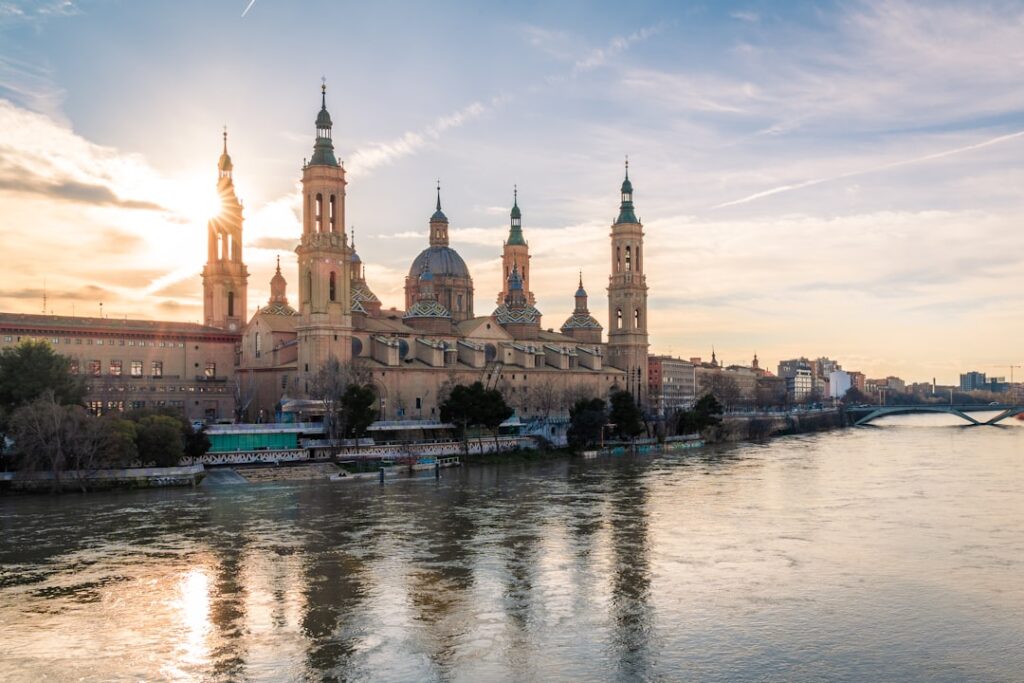
At about half past eight on an August evening, the swifts over Plaza del Pilar usually begin their frantic loops above the basilica towers, and the light on the stone turns the colour of toasted apricots. On 12 August 2026, that familiar Zaragoza summer scene will do something extraordinary: it will fade into totality. For roughly 1 minute and 27 seconds, the sun will disappear low above the west-northwest horizon, and one of Spain’s great urban squares will become an eclipse theatre.
If you are planning a trip for the solar eclipse Spain 2026 Zaragoza moment, this is one of the easiest Spanish cities in which to turn a rare astronomical event into a genuinely good short break. You can spend the day among Roman walls, Mudejar detail and excellent vermouth bars, then walk to your viewing spot without hiring a car. The trick is knowing where to stand, what to book early, and which corners of the old town are actually worth your time.
Why is Zaragoza one of the smartest places in Spain to watch the 12 August 2026 eclipse?
Because the city gives you something many eclipse destinations do not: a major historic centre sitting directly in the path of totality, with big open public space and straightforward logistics. The key facts matter. In Zaragoza, the partial eclipse begins at 19:34 CEST. Totality starts at 20:28, reaches maximum at 20:29, ends at 20:30, and the partial phase finishes at 21:21. Totality will last around 1 minute 27 seconds.
The important local detail is the sun’s position. During totality, it will be only 6 degrees above the west-northwest horizon. That means a handsome rooftop with church spires all around may actually be worse than a simple open riverside view. In Zaragoza, horizon matters more than height. You want a clean line to the west, not just a photogenic terrace.
This eclipse is also historically unusual. It is widely noted as the first total solar eclipse visible from the Iberian peninsula in more than a century, the previous comparable event dating back to 1912. That is one reason hotel demand is expected to be intense. The city council has already announced special cultural, scientific and festive programming for the date, which should make the atmosphere feel less like a technical astronomy gathering and more like a city-wide summer celebration.
If you are coming from Britain, there is another honest advantage. Zaragoza is often passed over in favour of Madrid, Barcelona, Seville or San Sebastián, which means it still feels like a real place rather than a stage set for visitors. For an event as brief as totality, that matters. You want the day around it to be enjoyable too.
Where should you actually stand when the sky goes dark?
The headline answer is Plaza del Pilar, and in this case the obvious answer really is a good one. It is one of the largest squares in Spain, broad enough to absorb crowds and open enough to give you that crucial western outlook towards the Ebro. The skyline is dramatic but not too cluttered, and you are unlikely to find yourself trapped in a maze of narrow streets just when the light starts changing.
Locals know that the best part of the square for an unobstructed view is not necessarily the most central bit for photographs. If you can, arrive early and test sightlines towards the river side and the west-northwest direction. Because the sun will be low, even a modest obstruction can matter. The difference between a perfect eclipse view and a frustrating one can be a row of lamps, a decorative balustrade or the wrong side of a terrace.
There is a useful rehearsal date too. On 30 April 2026 at 20:30, Spain will hold the so-called gemelo solar del eclipse, a kind of daylight twin of the eclipse’s solar position. This is a surprisingly sensible local planning trick: turn up at your intended viewing point on that day and see whether the sun is cleanly visible from where you plan to stand in August. It sounds nerdy; it is actually practical.
If Plaza del Pilar feels too busy, your second-best strategy is anywhere open near the Ebro with a clear view west. What I would avoid are the prettiest little lanes around El Tubo or tucked behind the cathedral precinct, lovely though they are. They frame the sky beautifully on ordinary evenings and block it at exactly the wrong moment on eclipse day.
One more point on safety, because it is non-negotiable: use certified eclipse glasses meeting ISO 12312-2 during all partial phases. Only during totality itself is direct viewing safe, and because totality in Zaragoza lasts barely a minute and a half, you need to be ready to put the glasses back on as soon as the sun reappears.
Is Zaragoza worth visiting if you are coming for the eclipse and not much else?
Yes, with one caveat: come because you like real cities, not because you want a polished checklist destination. Zaragoza does not flatter itself, and that is part of its charm. It can be hot, dry and a little scruffy around the edges in August. But it also has that enviable Spanish ability to feel lived in rather than curated.
British visitors often ask this quietly, as if they are being rude. They are not. The honest answer is that Zaragoza rewards curiosity more than box-ticking. If you need a city with an instantly obvious greatest-hits reel, you may warm more quickly to Seville or Granada. If you enjoy places where Roman remains, Mudejar towers, serious churches and excellent bar culture are woven into ordinary life, Zaragoza is absolutely worth a couple of nights.
The old centre is walkable, the food is good, and the monuments are substantial rather than decorative. You can spend the morning in the Aljafería, take vermouth before lunch, hide indoors through the afternoon heat, and be in position for totality by early evening. That compactness is exactly what you want on eclipse day. The city does not make you work too hard.
There is also something emotionally right about watching an event this old and cosmic in a city with layers of Roman, Islamic, Gothic, Renaissance and Baroque history. Zaragoza tends to reveal itself in details: a brick Mudejar tower catching late sun, a fragment of Roman wall embedded in a modern route, a square suddenly full of children at ten at night because it is August and nobody is in a hurry. For a short eclipse trip, that texture is enough.
Why is La Seo often more interesting than the Pilar, and why do so many visitors miss it?
Because the Basilica del Pilar gets the grand entrance and La Seo gets the subtle aftertaste. The Pilar is magnificent, of course, especially at dusk when the domes start glowing, but many people spend ages in the square and barely register what is just across it. La Seo del Salvador is, to my mind, the more revealing building if you want to understand Zaragoza rather than simply photograph it.
Part of the fascination is historical layering. The cathedral stands on a site that has held a Roman forum, a Visigothic church and a mosque before the Christian cathedral phase took shape. That is not unusual in Spain in the abstract, but in Zaragoza it feels unusually legible. The exterior’s Mudejar work has a textural richness the Pilar does not aim for: patterned brick, ceramic detail, and an almost conversational beauty compared with the basilica’s theatrical scale.
The unexpected detail I always point out is that many first-time visitors stare at the Pilar’s domes and miss one of the city’s quietest thrills: the cathedral museum and tapestry collection associated with La Seo have a seriousness and depth you would not guess from a quick walk-by. If you have any tolerance at all for sacred art or textile history, it is the kind of place that turns a “we’ll just pop in” stop into an hour.
For eclipse visitors, La Seo also helps solve a practical problem. August afternoons in Zaragoza can be punishingly hot, and old churches are still among the best places to reset your body temperature and attention span before the evening event. Do your indoor culture in the hottest part of the day; save the broad outdoor spectacle of the Pilar for the eclipse build-up.
What can you do in the hours before totality without exhausting yourself?
Keep the day deliberately light. The temptation on a special trip is to cram everything in, but eclipse days are improved by calm. Start early with one major sight and one long lunch, then retreat indoors or back to your hotel before returning to your viewing point well ahead of time.
The most sensible major sight is the Palacio de la Aljafería, Zaragoza’s Islamic palace turned Christian court and later military building. It is one of the finest things in the city, and it carries that happy surprise Zaragoza does well: an exterior some visitors underestimate, and interiors that make them go quiet. If you go, go in the morning before the heat thickens. It is also one of the stops on the city’s tourist bus route, which can be useful if you want a low-effort overview without too much walking.
The Autobús Turístico de Zaragoza is genuinely practical rather than gimmicky if you are only in town briefly. It runs daily from 10:30 to 18:00, with frequencies of roughly 30 to 45 minutes depending on the season, and covers 16 stops including the Pilar, La Seo and the Aljafería. Prices are straightforward: €10 for adults, €5 for over-65s, €8 for students, and free for children under 5. Tickets can be bought online, which is worth doing in a busy eclipse week.
For lunch, keep it central. If you want one properly local old-town recommendation, go to Bodegas Almau on Calle Estébanes. It is one of those Zaragoza institutions that manages to feel both classic and unpretentious, and yes, it is the place where squid can arrive served in a wine glass. That sounds like a gimmick until you are standing there with vermouth and realise it makes perfect sense.
After lunch, do as locals do in August: disappear for a while. Go back to your room, draw the curtains, charge your phone, check your eclipse glasses, fill a water bottle and head back out around 18:30 or 19:00. By then the city begins to breathe again.
Where to stay in Zaragoza old town if you want to walk everywhere on eclipse day?
If you are wondering where to stay in Zaragoza old town, the simplest answer is this: stay somewhere between Plaza España, El Tubo and Plaza del Pilar, so you can move on foot and avoid last-minute transport stress. On an event evening with crowds, being able to step out of your accommodation and walk 10 or 15 minutes to your viewing spot is far more valuable than having a bigger room on the edge of town.
Puerta Cinegia is one of the most practical micro-areas because it places you between the tapas lanes and the main monumental axis. From there, you can eat early, rest during the heat, and head to the square without tactical planning. It also helps the next morning, when you may want coffee and breakfast without crossing half the city.
A genuinely useful local tip here is ZaragozaHome: two apartments at Puerta Cinegia, right between El Tubo and Plaza España, with private parking included, a 9.8 rating on Booking.com, and rates from €85 per night. For couples or small groups who want the old town on the doorstep without giving up the practicalities, that is a very strong eclipse-week option.
The thing to remember for 12 August 2026 is that accommodation is likely to tighten early, not just because of astronomy enthusiasts but because the date falls in high summer and because Zaragoza is easier to reach than many rural viewing points. If you already know you are coming, book sooner than feels necessary.
If you are driving, parking matters more than usual. Old-town streets can be fiddly at the best of times, and a central place with private parking removes one of the city’s few logistical irritations. If you are arriving by train, central old-town accommodation makes even more sense, because you can drop bags and spend the rest of the trip entirely on foot.
What should you eat and drink before an eclipse evening in August?
Not as much as you think, and earlier than British habits might suggest. Zaragoza in August is made for a late rhythm, but an eclipse with fixed timings changes the calculation. You do not want to be ordering a second round at 20:20 when the light is beginning to tilt into something strange.
My preference is a substantial lunch and then a light early evening stop. El Tubo is the obvious district, but choose your bar carefully because not every place there is charming just because the lane is narrow. Besides Bodegas Almau, another sensible strategy is simply to take one vermouth, one tapa and move on, rather than settling into a full crawl. This is a day for pacing yourself.
Hydration is more important than people admit. By early evening the temperature may feel pleasant compared with the afternoon, but you will still have been carrying August heat all day. Bring water to your viewing point. If you are standing in Plaza del Pilar for a couple of hours, comfort becomes part of the experience.
And because this is Zaragoza, dinner can wait. One of the city’s strengths is that after the eclipse, provided you do not mind late eating, the night is still young. You can watch totality at 20:29, absorb the collective gasp, let the partial phase continue until 21:21, and still sit down for tapas or dinner at an entirely civilised Spanish hour.
How do you make the most of the city once the eclipse is over?
Stay out. That is the best advice. The old town in summer after sunset is one of Zaragoza’s quiet pleasures, and on eclipse night it is likely to have an extra charge to it. People who have just shared a rare sky event tend to become more conversational, more willing to linger, more inclined to look up again.
Walk from Plaza del Pilar through the old centre without an agenda. Cross the square slowly, glance back at the basilica, and let the city settle after the spectacle. If you have energy, drift towards El Tubo for food. If you prefer something calmer, look for a quieter street and one last drink. The point is not to rush back to your room as though the main event has ended everything else. In Zaragoza, August nights are part of the attraction.
The next morning, if you have time before leaving, do one thing most short-stay visitors neglect: walk by the Roman walls and the central market area, and look at the city in ordinary daylight after the drama. It is often then that people realise they liked Zaragoza more than they expected to.
FAQ
What time is the total solar eclipse in Zaragoza on 12 August 2026?
The partial eclipse begins at 19:34 CEST. Totality starts at 20:28, reaches maximum at 20:29, ends at 20:30, and the partial eclipse finishes at 21:21. Totality in Zaragoza will last about 1 minute and 27 seconds.
Where is the best place to watch the eclipse in Zaragoza?
Plaza del Pilar is the most practical and reliable choice because it offers a large open space and useful views towards the west-northwest horizon. Since the sun will be only 6 degrees above the horizon during totality, choose a spot with as few obstructions as possible.
Do I need special glasses to watch the eclipse?
Yes. You must use certified eclipse glasses meeting ISO 12312-2 during all partial phases. Only during the brief totality itself is it safe to look without protection, and you need to put the glasses back on as soon as the bright sun reappears.
Stay in the old town and walk to the eclipse
If you want to be between El Tubo, Plaza España and the route to Plaza del Pilar, these Puerta Cinegia apartments are one of the smartest bases for eclipse week: central, private parking included, and ideal for doing the evening on foot.
Looking for accommodation in central Zaragoza? Our ZaragozaHome apartments are steps from the Pilar, La Seo and El Tubo. Private parking included and rated 9.8 on Booking.com.