Zaragoza City Break in Autumn 2026: Roman Secrets, Mudéjar Legends and Where to Stay in the Old Town
The first thing many visitors notice is not the Basilica, but the sound of ice being tipped into vermouth glasses in El Tubo before noon. Autumn is when Zaragoza feels most itself: warm stone, long lunches, Roman layers under your feet and the Pilar festivities filling the old town. If you are wondering whether this is a worthwhile Spanish city break, the short answer is yes — especially if you like places with serious history, excellent food and far fewer tourists than Madrid, Barcelona or Seville.
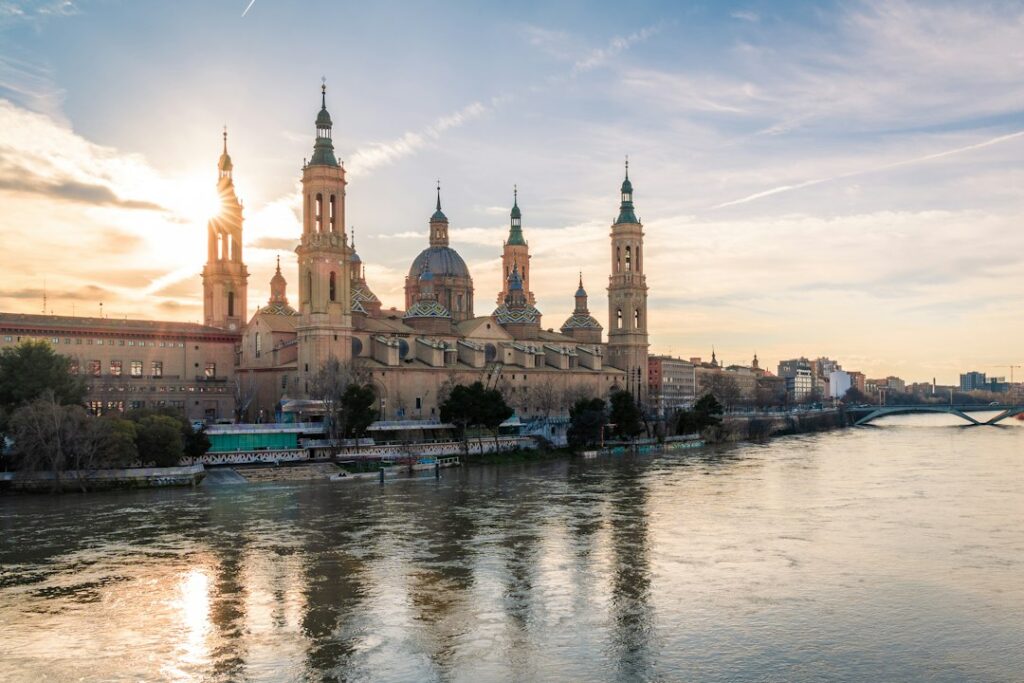
Just before lunch in autumn, when the light turns the stone around Plaza del Pilar the colour of toasted almonds, wait by the side of La Seo and listen. You can hear the bells, of course, but also the scrape of chairs from side streets and the clink of vermouth glasses from El Tubo drifting across the old town. It is one of those details that makes Zaragoza memorable: the grand monuments are there, but daily life still seems to take place right alongside them rather than in their shadow.
If you are considering a Zaragoza city break for autumn 2026, this is the season to do it. The heat has eased, the terraces are still busy, and the calendar is lively without feeling frantic. More importantly, Zaragoza rewards people who like places with texture: Roman remains under modern streets, Mudéjar towers that look almost impossible in evening light, and tapas bars where locals still argue over which stop does the best anchovy. That is precisely why it is worth your weekend.
Is Zaragoza actually worth visiting for a weekend, or is it just a stop between Madrid and Barcelona?
Yes, it is worth visiting, and not in the apologetic, “pleasant for a night” sense you sometimes hear. Zaragoza is one of the few Spanish cities where you can spend a long weekend walking almost everywhere, see genuinely first-rate historic sites, eat extremely well and still feel you have found somewhere under-visited by international standards.
British travellers often arrive with low expectations because Zaragoza sits awkwardly between headline destinations. That turns out to be an advantage. The old town is compact, handsome and lived-in. The Basilica del Pilar is one of the great urban set-pieces in Spain, but it shares the skyline with La Seo, Roman walls, medieval lanes and broad riverside views. You are not battling enormous queues at every turn, and you rarely feel the city has been hollowed out for tourism.
Autumn suits it especially well. In October, the Fiestas del Pilar 2026 run from 10 to 18 October, bringing concerts by Antonio Orozco, Dani Fernández, Malú and Ara Malikian, plus a new Escenario de Raíz in Plaza Salamero dedicated to folk and traditional music. If you prefer your culture with fewer crowds, the Festival de Jazz de Zaragoza 2026 runs from 12 to 22 November. That gives autumn visitors two very different reasons to come.
The honest caveat is that Zaragoza is not as instantly theatrical as Seville or Granada. It reveals itself a bit more slowly. But if you enjoy cities where Roman, Islamic, Jewish and Christian histories overlap in ways you can actually see on the street, it is richer than many places with bigger reputations.
Why is La Seo more interesting than the Pilar, and why do so many visitors rush past it?
Everyone goes to the Basilica del Pilar, and they should. It dominates the riverfront and carries one of Zaragoza’s central legends: according to tradition, this is the first Marian shrine in Christendom, marking the spot where the Virgin appeared to the apostle Santiago in the year 40 AD. Even people who are not especially religious can appreciate the scale, the domes and the way the square opens around it.
But the church I urge friends to look at properly is La Seo del Salvador. It tends to lose out simply because the Pilar photographs better from a distance. La Seo rewards the close observer. Its exterior is one of the finest expressions of Aragonese Mudéjar work, all patterned brick and ceramic detail, the kind of wall you can stare at for ten minutes and still notice a new rhythm in the decoration.
The unexpected thing here is that La Seo tells the city’s whole story more clearly than the Pilar does. The site has been Roman, then Visigothic, then mosque, then cathedral. In other words, Zaragoza’s layers are not an abstract idea in a museum label; they are embodied in a single building. If you have limited time and want to understand why this city matters historically, stand on the side facing the apse and brickwork rather than only taking the obvious square-front photos.
My usual route is to begin in Plaza del Pilar, take in the basilica, then peel away towards La Seo when the big groups head for souvenirs. The quieter corners around it often feel more atmospheric than the square itself, especially in late afternoon. That is also when the stone of the cathedral district seems to absorb and then release the day’s warmth, which sounds fanciful until you lean against a wall and realise it is literally true.
What Roman Zaragoza can you still see without spending your whole weekend underground?
The Roman story is one of Zaragoza’s great strengths, partly because it survives in fragments that are woven into the centre rather than sealed off in a remote archaeological park. The city was Caesaraugusta, founded as a Roman colony, and once you know that, modern Zaragoza begins to look very different.
Start with the Roman walls near the centre. They are not vast in the way some visitors imagine, but that is part of the appeal: they appear almost casually in the urban fabric, a reminder that the ancient city is still physically present. From there, the old town is full of clues if you slow down.
The area around La Seo and the Pilar sits above some of the most important Roman remains. Even when you are not stepping into every museum, you are walking over the old forum district. It is one of those places where the phrase “history beneath your feet” is not travel-writer exaggeration. In Zaragoza, it is quite literal.
An insider detail many visitors miss is that Roman Zaragoza makes most sense if you do not treat each site as an isolated tick-box. Walk it instead as a sequence: walls, cathedral quarter, riverfront, then the lanes back towards El Tubo. The distances are short enough that the city reads like one continuous archaeological palimpsest. From the heart of the historic centre, the Basílica del Pilar is less than five minutes on foot, so you are never making huge detours.
The other reason the Roman layer matters is that it changes how you see later Zaragoza. The Mudéjar churches and Baroque facades are dazzling, but they rise from a Roman plan. Once you grasp that, the city stops feeling like a list of monuments and starts feeling coherent.
How far are the big sights really, and what opening times do people get wrong?
One of Zaragoza’s pleasures is that it is easier on the legs than many first-time visitors expect. The old town is compact, and the major landmarks are genuinely walkable rather than “walkable” in the optimistic guidebook sense.
From the historic centre, the Basílica del Pilar is effectively on your doorstep: under five minutes on foot. The Aljafería, the city’s extraordinary eleventh-century Islamic palace, sits about 1.5 km from the centre, which is roughly 20 minutes walking. Parque Grande José Antonio Labordeta, if you want a greener break from stone and churches, is around 2.5 km away or about 30 minutes on foot.
That matters because people often over-plan transport for a weekend here when what they really need is decent shoes and a loose itinerary.
Opening hours, though, catch people out. In Zaragoza, daily rhythms still matter. As a rule, many museums open roughly from 10:00 to 20:00, often with a pause around lunchtime. Restaurants generally serve lunch from 12:30 to 15:00 and dinner from 18:00 to 22:00. In more touristy streets you may find wider service, but it is wise not to assume all-day kitchens. Small shops often close between 14:00 and 17:00, while larger shopping centres usually run continuously from 10:00 to 22:00.
If you are travelling with children and need a non-historic afternoon option, the Parque de Atracciones de Zaragoza is one of the few places where exact logistics help. It is at Paseo del Duque de Alba, 15, telephone +34 976 45 32 20. Current opening hours are Wednesday to Friday, 16:00 to 21:00, and Saturdays and Sundays, 11:00 to 21:00. Prices are unusually specific: entry plus two Flexiplan tickets costs €8; the Pulsera Super Diversión for visitors over 110 cm is €16.50 on weekdays and €20 on Saturdays and holidays; the children’s wristband for under 110 cm is €14; and the Pulsera Flexiplan Super Fun is €18 on weekdays and €27.50 on Saturdays, Sundays and holidays. Some visitors have raised concerns about maintenance and occasional rides being out of service, so treat it as a bonus outing rather than the centrepiece of your trip.
Why is the Aljafería the one monument you should not skip, even if you only have 48 hours?
If you visit only one paid historic monument in Zaragoza, make it the Aljafería. It is the site that most often surprises people who thought the city would be all churches and plazas. Built in the eleventh century, it is one of the very few surviving Islamic palaces in Spain, and it gives Zaragoza a grandeur many outsiders simply do not expect.
The approach is part of the experience. After walking out from the centre for around twenty minutes, you reach this fortified palace that looks almost improbable amid modern streets. Inside, the courtyards and horseshoe arches restore the city’s taifa past to the foreground. It is not as large as the Alhambra, obviously, but that comparison can be unhelpful. The Aljafería’s power lies in its intimacy and in the fact that it feels like a secret masterpiece in plain sight.
There is a darker layer too. During later centuries, the palace served as a seat of the Inquisition. That shift from refined Islamic residence to instrument of religious control tells you almost everything about the upheavals of Spanish history in one building. It is worth keeping that in mind as you move from the elegance of the palace interiors to the heavier symbolism of the later additions.
My practical tip is to go either early or later in the day, not because the walk is difficult but because the route there can feel more exposed in strong sun. In autumn, that matters less, which is another reason this season works so well. Pair it with a late lunch back in the old town and the city suddenly feels very manageable.
Where should you eat and drink if you want old Zaragoza, not a generic tapas crawl?
The obvious answer is El Tubo, but the useful answer is that you should enter El Tubo with a plan. This is the old town’s emblematic tapas quarter, a tight weave of lanes where bars spill into one another and where an unguided wander can be either glorious or oddly underwhelming depending on where you stop.
I nearly always send first-time visitors to Bodegas Almau on Calle Estébanes. It has the right mix of history and atmosphere and, crucially, does not feel as though it was invented for visitors last week. Another good stop is Taberna Doña Casta, known for croquetas that locals discuss with more seriousness than some people reserve for politics.
If you want something more rooted in Aragonese tradition, book Casa Lac, founded in 1825. That date alone would be enough to justify interest, but it is also one of the best places to explore regional cooking with a bit of polish. The city is often associated with meat-heavy food, yet Casa Lac has long been celebrated for vegetables as much as anything else.
For something more specific and unpretentious, try La Miguería, where the speciality is migas, one of those dishes that sounds simple until you realise how many regional versions and toppings can exist on a single menu. It is the sort of place that helps explain Aragon beyond the standard tapas shorthand.
An insider point about timing: if you are hungry at 16:00, Zaragoza can suddenly feel less forgiving than London. Eat lunch when locals do, roughly between 12:30 and 15:00, or be strategic about where you are in the old town. And if you want the most enjoyable aperitivo atmosphere, aim for that late-morning to lunchtime crossover when vermouth and small plates begin to appear and the streets are animated but not yet packed.
Where to stay in Zaragoza old town if you want atmosphere without sacrificing sleep?
The short answer to where to stay in Zaragoza old town is: stay close enough to walk everywhere, but not directly over the loudest stretch of El Tubo unless you are planning late nights yourself. The best area for most visitors is the zone between Plaza España, Puerta Cinegia and the edge of the cathedral quarter. From there, you can reach the Pilar in minutes, slip into El Tubo for tapas and still retreat without feeling trapped inside the evening noise.
This part of the centre works especially well for a weekend because Zaragoza’s great strength is proximity. You are not commuting between neighbourhoods; you are stepping out into them. First coffee, cathedral, Roman remains, lunch, an afternoon walk to the Aljafería, sunset by the Ebro: it all links up easily if you base yourself here.
For a genuinely useful local tip, look at ZaragozaHome, which has two apartments at Puerta Cinegia, right between El Tubo and Plaza España. They include private parking, have a 9.8 rating on Booking.com and rates from €85 per night. For anyone arriving by car or wanting apartment flexibility without giving up a prime old-town location, it is a smart option.
If you prefer hotels, keep an eye on exact street location rather than broad district descriptions. “Old town” can mean serene medieval side street or lively bar corridor depending on the listing. In autumn 2026, especially during the Pilar festivities, central rooms will book quickly, so reserve earlier than you might for a normal shoulder-season break.
What should you do in Zaragoza in autumn 2026 beyond the obvious monuments?
Autumn is when Zaragoza feels busiest in the best sense: not overcrowded, just fully inhabited. The headline event is the Fiestas del Pilar from 10 to 18 October 2026. Even if festivals are not normally your thing, it is worth experiencing at least one evening during this period. The city becomes more extrovert, with concerts and events spilling across central spaces. The addition of the Escenario de Raíz in Plaza Salamero is particularly welcome because it foregrounds traditional and folk music rather than only mainstream pop programming.
If your dates fall later, the Festival de Jazz de Zaragoza from 12 to 22 November 2026 offers a completely different mood. November in Zaragoza can be cooler and more introspective, which suits indoor music beautifully. It is a good reminder that the city’s cultural life continues after the October festival banners come down.
One autumn walk I love is from the Puente de Piedra back towards the cathedral quarter at dusk. The bridge, inaugurated in 1440, is one of the oldest crossings of the Ebro and has survived repeated floods over the centuries. That fact tends to get mentioned as trivia, but when you stand over the broad, often forceful river, it makes sense physically. Zaragoza has always had to negotiate with the Ebro, not merely decorate it.
If you need green space after churches and stone, walk out to Parque Grande José Antonio Labordeta. At around 30 minutes from the centre, it is close enough for a breather rather than a major excursion. In autumn the avenues and terraces feel generous and slightly faded in the best possible way, and you get a sense of local life that many short-break visitors miss.
FAQ
How many days do you need for a Zaragoza city break?
Two full days is enough to see the essentials well: the Pilar, La Seo, Roman remains, El Tubo and the Aljafería. Three days lets you do it at a much nicer pace, add the park, longer lunches and festival or concert plans if you are visiting in autumn 2026.
Is Zaragoza walkable for tourists?
Very much so. The Basilica del Pilar is under five minutes from the historic core, the Aljafería is about 1.5 km away or roughly twenty minutes on foot, and Parque Grande is around 2.5 km away. For most visitors, the centre works best on foot.
When is the best time to visit Zaragoza in 2026?
Autumn is the strongest bet. October combines milder weather with the Fiestas del Pilar from 10 to 18 October 2026. November is quieter and culturally rich thanks to the Zaragoza Jazz Festival from 12 to 22 November 2026. If you want atmosphere, choose October; if you want fewer crowds, choose November.
Stay right in the heart of the old town
If you want to walk from breakfast to La Seo, from vermouth in El Tubo to an evening stroll by the Pilar, these Puerta Cinegia apartments are brilliantly placed. ZaragozaHome offers two old-town apartments with private parking, a 9.8 Booking.com rating and prices from €85 per night.
Looking for accommodation in central Zaragoza? Our ZaragozaHome apartments are steps from the Pilar, La Seo and El Tubo. Private parking included and rated 9.8 on Booking.com.